PHYSIK INSTRUMENTE 11350 Spring Cross Roller Linear
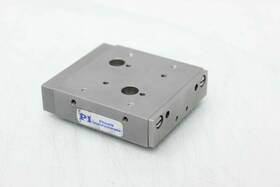
( Brand: Physik Instrumente ), ( Manufacturer Part Number: 11350 ), ( Part Type: Spring Roller Linear )
Review PHYSIK INSTRUMENTE Spring Loaded Cross Roller Linear Stage
The **Physik Instrumente (PI) 11350 Spring Cross Roller Linear Stage** is a high-precision, compact linear motion system engineered for demanding applications in optics, semiconductor inspection, microscopy, and automated testing. This stage combines the robustness of a spring-loaded cross-roller bearing design with the exceptional smoothness and repeatability required for nanometer-scale positioning. The cross-roller mechanism ensures minimal friction and wear, delivering smooth motion with negligible hysteresis, making it ideal for high-speed scanning, vibration-sensitive experiments, or applications where positional accuracy is critical. With a travel range of up to 50 mm (depending on the configuration), the stage provides ample workspace while maintaining sub-nanometer resolution, thanks to PI s proprietary control algorithms and high-precision feedback systems. The modular design allows for easy integration into existing setups, with versatile mounting options, including flange, baseplate, or custom adapters, ensuring compatibility with a wide range of optical benches, microscopes, and automated systems. Constructed from high-quality materials, including hardened steel and corrosion-resistant coatings, the stage is built to withstand rigorous environmental conditions, including temperature fluctuations and exposure to cleaning agents, ensuring long-term reliability. Its lightweight yet sturdy construction minimizes inertia, enabling rapid acceleration and deceleration without compromising positional stability. Whether used in precision metrology, laser alignment, or automated material testing, the PI 11350 excels as a versatile, high-performance linear actuator that bridges the gap between precision and practicality, delivering consistent, repeatable motion with minimal maintenance requirements.
The Physik Instrumente (PI) 11350 Spring Cross Roller Linear Stage is a high-precision, open-loop linear positioning system designed for applications requiring nanometer-level accuracy, smooth motion, and high repeatability. Below is a detailed breakdown of its pros and cons, followed by a conclusion and recommendation.
---
### **Pros of the PI 11350 Spring Cross Roller Linear Stage**
1. **Exceptional Precision and Resolution**
The stage uses a spring cross roller guide, which provides extremely low friction and minimal backlash. This design ensures sub-nanometer positioning accuracy and repeatability, making it ideal for applications in microscopy, nanotechnology, semiconductor inspection, and metrology. The open-loop control (with optional closed-loop feedback) allows for high-speed positioning without the complexity of encoders or resolvers.
2. **High Load Capacity**
With a maximum load capacity of 10 kg (depending on configuration), this stage can handle substantial payloads while maintaining stability and precision. This makes it suitable for heavy optical components, probes, or sample holders in research and industrial applications.
3. **Smooth and Quiet Operation**
The cross roller guide minimizes vibration and noise, which is critical for sensitive measurements or imaging applications where mechanical disturbances can degrade performance. The absence of ball screws or lead screws reduces hysteresis and stiction, further enhancing smoothness.
4. **Compact and Rigid Design**
The stage s compact footprint and rigid construction reduce resonance and flexure, which is beneficial for high-accuracy applications. The absence of moving belts or cables (in some configurations) eliminates sagging or slippage issues.
5. **Versatility and Customization**
The PI 11350 can be integrated into multi-axis systems or combined with other PI stages (e.g., rotary, XYZ) for complex motion control. It supports various mounting options (e.g., baseplate, flange, or custom adapters) and can be paired with PI s controller software (e.g., PI E-710) for seamless integration with lab automation or custom control systems.
6. **Open-Loop Operation with High Performance**
While open-loop systems typically lack feedback, PI s proprietary control algorithms and high-quality actuators (e.g., voice coil or stepper motor-driven variants) compensate for this limitation, offering performance comparable to closed-loop systems in many cases. This simplifies system design and reduces costs.
7. **Durability and Longevity**
PI stages are known for their robust build quality and long operational lifespans, even under frequent use. The cross roller guide is less prone to wear compared to ball screws or linear guides, reducing maintenance requirements.
8. **Compatibility with PI s Ecosystem**
The stage integrates seamlessly with PI s controllers, amplifiers, and software tools (e.g., PI Motion Control Suite), which are widely used in research and industry. This ecosystem simplifies programming, calibration, and troubleshooting.
9. **Temperature Stability**
PI stages are designed to minimize thermal drift, which is critical for long-term stability in applications like lithography or precision metrology. The materials and construction reduce thermal expansion effects.
10. **Global Support and Warranty**
PI is a well-established company with extensive technical support, documentation, and warranties. This provides peace of mind for users, especially in high-stakes applications.
---
### **Cons of the PI 11350 Spring Cross Roller Linear Stage**
1. **High Cost**
The PI 11350 is a premium product, and its price reflects its high precision, durability, and performance. For budget-conscious applications, alternatives like less precise linear slides or belt-driven stages may be more cost-effective, though they may sacrifice accuracy or load capacity.
2. **Open-Loop Limitations**
While PI s open-loop control is highly optimized, it still lacks the positional feedback of closed-loop systems. In applications requiring absolute positioning (e.g., without homing sensors), drift or misalignment over time can occur. Closed-loop variants (e.g., with encoders) are available but increase complexity and cost.
3. **Limited Travel Range Options**
The standard travel range for the 11350 is typically up to 50 mm (depending on the variant). For applications requiring longer strokes (e.g., 100 mm or more), other PI models (e.g., the 11350 with extended travel or multi-stage configurations) may be necessary, which could increase cost or complexity.
4. **Mounting and Integration Complexity**
While the stage is versatile, integrating it into an existing system may require custom mounts, alignment tools, or additional hardware (e.g., vibration isolation). This can add time and cost to the project, especially for non-engineering users.
5. **Power and Control Requirements**
The stage requires a compatible controller (e.g., PI s E-710) and amplifier, which adds to the system s footprint and power consumption. Users must ensure their lab infrastructure can support these requirements.
6. **Maintenance and Calibration Needs**
Although PI stages are durable, periodic calibration and maintenance (e.g., lubrication, alignment checks) are recommended to sustain performance. This may require specialized training or support from PI or a local technician.
7. **Not Ideal for High-Speed Dynamic Applications**
While the stage offers smooth motion, its primary strength lies in precision and stability rather than high-speed acceleration or deceleration. For applications requiring rapid movement (e.g., pick-and-place), other technologies (e.g., voice coil actuators or piezoelectric stages) may be more suitable.
8. **Dependence on PI s Software and Hardware**
Users are somewhat locked into PI s ecosystem for optimal performance. Switching to third-party controllers or software may require additional development effort and could compromise performance guarantees.
9. **Potential for Overkill in Some Applications**
For less demanding applications (e.g., simple prototyping or low-precision tasks), the 11350 may offer more capability than needed. In such cases, lower-cost alternatives (e.g., Thorlabs or Newport linear stages) could suffice.
10. **Lead Times and Availability**
As a high-end product, the 11350 may have longer lead times or limited stock availability, depending on demand. This could delay projects if not planned for in advance.
---
### **Conclusion**
The Physik Instrumente 11350 Spring Cross Roller Linear Stage is one of the most precise and reliable open-loop linear stages available, excelling in applications where nanometer-level accuracy, smooth motion, and durability are critical. Its strengths lie in its exceptional performance for research, microscopy, metrology, and industrial automation, where cost is not the primary constraint. However, its high cost, open-loop limitations, and integration complexity make it less suitable for budget-sensitive or high-speed applications.
For users who prioritize precision, stability, and long-term reliability, the 11350 is an excellent investment. Conversely, those with tighter budgets or simpler requirements may find more affordable alternatives adequate. Additionally, users should carefully evaluate whether open-loop performance meets their needs or if a closed-loop variant is necessary.
---
### **Recommendation**
**Buy the PI 11350 if:**- Your application demands sub-nanometer precision, minimal backlash, and smooth motion (e.g., high-resolution microscopy, nanolithography, semiconductor inspection, or precision metrology).
- You require a robust, durable stage capable of handling loads up to 10 kg without compromising accuracy.
- You are willing to invest in PI s ecosystem for seamless integration with their controllers and software.
- Your project cannot tolerate vibration, noise, or thermal drift, and open-loop performance is acceptable (or you can justify the cost of a closed-loop variant).
**Consider alternatives if:**- Your budget is limited, and you can tolerate slightly lower precision (e.g., Thorlabs or Newport linear stages with ball screws or linear guides).
- Your application requires longer travel ranges or higher speeds, which may not be optimally supported by the 11350.
- You lack the expertise or resources to integrate and maintain a high-precision stage, as this may require additional training or support.
**Final Verdict:**For applications where precision is non-negotiable and budget is not a constraint, the PI 11350 is a top-tier choice. Its combination of accuracy, load capacity, and reliability makes it a staple in advanced research and industrial settings. However, potential buyers should thoroughly assess their specific requirements and compare them against the stage s capabilities to ensure it aligns with their needs. Consulting with PI s technical support or a system integrator can also help determine whether the 11350 is the best fit for your project.
Details:
It has an 18mm stroke and measures 54mm x 61mm 15.5mm high. Physik Instrumente 11350 All Photos 8 images thumbnail to view Here is spring loaded cross roller linear stage. Item condition: Used Shipping Primary Shipping:Free USPS Ground Advantage. LOCATION: C0106 BIN: C-0106-E.
The travel is smooth and tight without play as it should be. This is in good functional and cosmetic shape. LIST: 07/24 HF.
part #: 11350 price
- $88.60
specifications linactuat:
- brand: Physik Instrumente
- mpn: 11350
- part type: Spring Roller Linear
payments linactuat:
- credit card: Diners-club
- other
- wallet: Apple-pay
shipping linactuat:
- class: Standard, One-day
- carrier: USPS, UPS
- transit: 4-8 Days
- cost: $0.00
- type: Calculated
- service: USPS Ground Advantage, UPS Ground, UPS Next Day Air
offer linactuat:
- best offers: True
- sold: 0
- availability: In Stock
- quantity: 1
- started: June 8, 2026
- options: Ship-to-home
general linactuat:
- Industrial Automation Motion Controls > Rotary Linear Motion > XY Rotary Positioning Stages
- condition: Used
seller linactuat:
- # reviews: 21813
- rating: 100.0%
- city: Laporte, Colorado
returns linactuat:
- time: 30 Days
- paid by: Buyer
- method: Money back
- policy: Returns Accepted
Physik Instrumente 11350 Is Similar To:
- Al03-12-a2-305-200-c11 Pi Physik Instruments Linear Actuator (45.2% similar) ...(March 27th, 2019)
- M-235.5dd Physik Instrumente Pi Linear Ball Screw Actuator (49.2% similar) Sales and shipping only within the us. Includes ball tip. Condition is used. 5DD linear ball screw 50MM. Physik Instrumente pi m please see photo for actual product sale and physical condition...(February 3rd, 2019)
- M-235.5dg Physik Instrumente Linear Ballscrew (51.4% similar) Installed in machine that never sold. 3 Physik Instrumente linear actuators...(July 2nd, 2018)
- M-126 Pi Precision Translation Stage Physik Instrumente (30.3% similar) Shipping buyer pays for all shipping costs. Orders are shipped to the cardholders billing address. DX precision translation stage Physik Instrumente questions. Here : this lot is for one pi M-126. Warranty this item is guaranteed to be as described. Good luck buying. DX Physik Instrumente. On the ...(October 2nd, 2019)
- Physik Instrumente P-820.3b-e617 0 C194314 Pi P-820.3b Piezo Actuator Micrometer Test Fixture (39.5% similar) The unpacked weight of this item is 1 pound. 95020 408 886-3700. No software, power cords, or other accessories are included unless stated above. Approximate overall unpacked dimensions: 6 l x 3 all offered products are sold as advertised, is and without warranty. However, I have no way of testing ...(August 10th, 2024)
- Physik Instrumente P-601.10l C194288 Lot 2 Pi Piezo Stack Linear Actuator (54% similar) The unpacked weight of this item is 1 pound. This lot includes a pair of Physik Instrumente pi P-601.10L Puzo stack linear actuators, as shown. Approximate overall unpacked dimensions: 8 l x 7 w all offered products are sold as advertised, is and without warranty. The other has been opened, but I'm ...(August 10th, 2024)
- Physik Instrumente P-622k031 C194533 Pi Pihera Linear Positioner E-610 Piezo Amp (48.6% similar) These items looks to be in good cosmetic condition, showing some minor signs of wear. All offered products are sold as advertised, is and without warranty. The unpacked weight of this item is 3 pounds. This lot includes a Physik Instrumente pi E-610.C0X PFC controller/Puzo amplifier with P-622K031 ...(August 29th, 2024)
- Physik Instrument Rs-40 Am1524 Pi Micos Compact Rotation Stage V7 (52.7% similar) In addition, the surface is made of un coated aluminum and spindles guides are stainless steel. This compact rotation stage from pi micros is an excellent choice for anyone in need of precision rotary motion. Beam line instrumentation. It is suitable for use in a wide range of industries, including ...(December 5th, 2024)
- Physik Instrumente Dt-80 Pi Micos Compact Rotation Stage With Pollux Box (51.5% similar) Included accessories Pollux box 123. Pi Physik Instrumente micros DT-80 compact rotation stage with Pollux box, overview unlimited travel range. Condition used item in good cosmetic condition with typical signs of use present. Maximum velocity 40 /s. Repeatability to 175 rad. Reference switch...(December 24th, 2024)
- Physik Instrumente Pi P810-20 Unkown Preloaded Piezo Actuator (56% similar) Physik Instrumente Puzo actuator. Type P.810-20. From a company that made UV dental lasers. Measures just under 6MM in diameter, and is 38.4MM long. Serial number: 36665. Piston moves when 12V applied. Not much else is known about this, hence the clearance price...(January 1st, 2025)
- Physik Instrumente P-752.1cd C196637 Nanopositioining Stage E-625.cr Pzt Control (47.2% similar) The controller powers up, but I'm not sure how to test the motion of stage. Approximate overall unpacked dimensions: 9 l x 5 no software, power cords, or other accessories are included unless stated above. 95020 408 886-3700. The unpacked weight of this item is 4 pounds. These items looks to be in ...(January 16th, 2025)