DOVER MOTION 12-1748 Renishaw
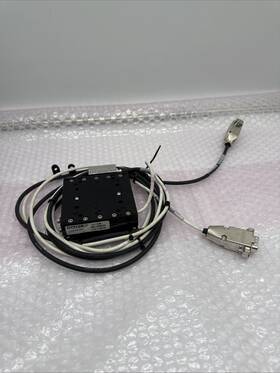
( Brand: Dover Motion ), ( Manufacturer Part Number: 12-1748 ), ( Country Of Origin: United Kingdom )
Review DOVER MOTION Renishaw
The **Dover Motion Renishaw 12-1748** is a high-precision, linear encoder system designed to deliver exceptional accuracy and reliability in motion control applications. This compact yet robust encoder combines Renishaw s renowned engineering expertise with Dover Motion s commitment to performance-driven solutions, making it an ideal choice for industries requiring sub-micron positioning, such as semiconductor manufacturing, medical equipment, photonics, and advanced robotics. Engineered with a **1 m resolution** and a **10 m repeatability**, the 12-1748 leverages Renishaw s proprietary **Renishaw RLE (Renishaw Linear Encoder)** technology, which integrates a high-stiffness, low-friction guideway with a precision optical scale for seamless, backlash-free motion. The encoder features a **12 mm wide** profile, optimized for integration into tight spaces while maintaining structural integrity, and is compatible with a range of mounting configurations, including direct attachment to linear slides, ball screws, or gantry systems. Its **absolute encoding** capability ensures quick and accurate homing, eliminating the need for time-consuming reference searches, which is particularly advantageous in automated production environments where downtime must be minimized. The system incorporates a **high-bandwidth, digital signal interface** (typically RS-422 or Ethernet-based, depending on the variant) that supports real-time feedback, enabling closed-loop control with minimal latency. Additionally, the 12-1748 is built to withstand harsh operating conditions, with an **IP65-rated enclosure** that protects against dust, moisture, and contaminants, making it suitable for cleanroom environments or industrial settings where reliability is paramount. Whether deployed in high-speed pick-and-place systems, precision metrology tools, or adaptive manufacturing cells, this encoder delivers consistent performance, reducing errors and enhancing overall system efficiency. With its seamless integration with major motion control platforms such as those from Beckhoff, Siemens, or National Instruments the **Renishaw 12-1748** serves as a cornerstone for achieving unparalleled positional accuracy in demanding motion applications.
### **Pros and Cons of buying a Dover Motion Renishaw 12-1748 Linear Encoder**
The **Dover Motion Renishaw 1748** is a high-precision incremental linear encoder designed for motion control applications, particularly in CNC machines, robotics, and automated systems. Below is a detailed analysis of its advantages and disadvantages.
---
### **Pros**
1. **High Precision and Resolution**
The Renishaw 1748 series is known for its exceptional accuracy, typically offering sub-micron resolution. This makes it ideal for applications requiring tight positional control, such as CNC machining, semiconductor manufacturing, and high-speed automation.
2. **Reliability and Durability**
Renishaw is a well-established brand in precision measurement, and its encoders are built to withstand harsh industrial environments. The 1748 model is designed for long-term use with minimal maintenance, making it suitable for continuous operation in factories or research labs.
3. **Compatibility with Renishaw s Ecosystem**
The encoder integrates seamlessly with other Renishaw products, such as the **RLE (Renishaw Linear Encoder)** system, **XM-80** or **XM-100** scales, and **iGO!** controllers. This ensures easy integration into existing motion control setups without significant modifications.
4. **High Speed and Dynamic Performance**
The encoder can handle high-speed movements (up to several meters per second, depending on the configuration) while maintaining positional accuracy. This is crucial for applications like pick-and-place robots or high-speed milling machines.
5. **Environmental Resistance**
The 1748 series is often rated for **IP67** or higher, meaning it is protected against dust, water, and oil contamination. This makes it suitable for dirty or wet industrial environments.
6. **Flexible Mounting Options**
The encoder can be mounted in various configurations, including **direct shaft coupling, belt drive, or gearless systems**, allowing for customization based on application requirements.
7. **Long-Term Availability and Support**
Renishaw has a strong global support network, ensuring that spare parts, calibration services, and technical assistance are readily available. This reduces downtime and maintenance costs over the product s lifespan.
8. **Backward and Forward Compatibility**
The incremental output (typically **SSI or EnDat**) is widely supported by motion controllers from major manufacturers (e.g., Beckhoff, Siemens, Fanuc, and Delta). This flexibility simplifies integration into different control systems.
9. **Minimal Maintenance Requirements**
Unlike mechanical systems with wear-prone components (e.g., lead screws or ball screws), the Renishaw encoder has no moving parts in the sensing mechanism, reducing the need for frequent adjustments or replacements.
10. **Calibration and Traceability**
Renishaw encoders are factory-calibrated and can be traceable to national standards, ensuring consistent performance across different machines. This is critical for industries like aerospace or medical device manufacturing where traceability is mandatory.
---
### **Cons**
1. **High Initial Cost**
The Renishaw 1748 is a premium product, and its price is significantly higher than that of generic or lower-end encoders. The cost can be a barrier for small businesses or startups with limited budgets.
2. **Complex Installation and Setup**
Due to its precision requirements, installing and calibrating the encoder may require specialized knowledge. Users without experience in motion control systems might need to hire a technician or undergo training, adding to the overall cost.
3. **Limited DIY Repairability**
Renishaw encoders are designed for professional use, and their internal components are not easily replaceable by end-users. Faulty units may require sending them back to Renishaw or an authorized service center, leading to potential downtime.
4. **Potential for Signal Noise in Harsh Environments**
While the encoder is robust, extreme electromagnetic interference (EMI) or mechanical vibrations can sometimes affect signal integrity. Proper shielding and grounding may be necessary in noisy industrial settings.
5. **Dependency on Renishaw s Proprietary Systems**
While the encoder itself is versatile, some of Renishaw s advanced features (e.g., certain calibration tools or software) may require purchasing additional Renishaw products, increasing long-term costs.
6. **Stock Availability and Lead Times**
As a high-demand product, the Renishaw 1748 may have variable lead times, especially for custom configurations or large orders. This could delay projects if parts are not readily available.
7. **Overkill for Low-Precision Applications**
For applications where sub-micron accuracy is unnecessary (e.g., simple conveyor systems or basic automation), the cost of the Renishaw encoder may not justify its performance. A lower-cost encoder (e.g., from Heidenhain or other brands) might suffice.
8. **Learning Curve for New Users**
Mastering the full capabilities of the Renishaw encoder such as advanced calibration techniques or integration with Renishaw s software requires time and training. This can be a drawback for teams without prior experience.
---
### **Conclusion**
The **Dover Motion Renishaw 12-1748** is one of the most precise and reliable linear encoders available for high-end motion control applications. Its strengths lie in **unmatched accuracy, durability, compatibility with Renishaw s ecosystem, and long-term reliability**, making it an excellent choice for industries where precision is non-negotiable such as aerospace, semiconductor manufacturing, medical devices, and advanced CNC machining.
However, the **high cost, complex installation, and potential dependency on Renishaw s proprietary systems** may not make it practical for all users. Businesses with tight budgets or simple automation needs might find more cost-effective alternatives. Additionally, users without experience in motion control may face challenges in setup and maintenance.
### **Recommendation**
- **Buy the Renishaw 1748 if:**- You require **sub-micron precision** in your application (e.g., CNC milling, robotics, or high-speed automation).
- You are already using **Renishaw products** and need seamless integration.
- Your budget allows for a **premium, low-maintenance solution** with long-term reliability.
- Your environment is **industrial-grade**, and you need **IP-rated protection** against dust and moisture.
- **Consider alternatives if:**- Your application does not require **extreme precision**, and a **lower-cost encoder** (e.g., Heidenhain, Panasonic, or generic SSI encoders) would suffice.
- You lack **expertise in motion control setup**, as the learning curve may be steep.
- Your budget is **limited**, and you can justify the trade-off between cost and performance.
For most **high-precision motion control applications**, the Renishaw 1748 is a **strong recommendation** due to its industry-leading performance and reliability. However, a thorough cost-benefit analysis should be conducted to ensure it aligns with your specific requirements.
Details:
The DOVER MOTION 12-1748 is a high-quality linear Motion system designed by the reputable brands and RENISHAW. Made in the United Kingdom, this system is perfect for industrial automation and Motion control applications that require precise reliable positioning. With its XY and rotary positioning capabilities, the DOVER MOTION 12-1748 offers exceptional performance accuracy for a wide range of industrial uses.
part #: 121748 price
- $159.99
specifications linactuat:
- brand: Dover Motion
- mpn: 12-1748
- country of origin: United Kingdom
seller linactuat:
- # reviews: 5669
- rating: 99.4%
- city: Los Gatos, California
payments linactuat:
- wallet: Paypal
- other
- credit card: Diners-club
offer linactuat:
- sold: 0
- availability: In Stock
- quantity: 1
- started: February 19, 2026
- best offers: True
- options: Ship-to-home
returns linactuat:
- policy: No Returns
general linactuat:
- Industrial Automation Motion Controls > Rotary Linear Motion > XY Rotary Positioning Stages
- condition: Used
shipping linactuat:
- cost: $0.00
- transit: 5-11 Days
- class: Standard
- type: Calculated
- carrier: USPS
- service: USPS Ground Advantage
Dover Motion 12-1748 Is Similar To:
- Dover 11-0359 Dof-5 Precision Motion Stage Excellent Condition Fully Tested (30.8% similar) In addition, the DOF-5 can be connected directly to an auto focus system for easy integration. Long-life: quiet brush less linear motor, non-contact encoder, crossed-roller bearings. Integrated solution for multiple stages. Easy integration; with minimized footprint, complexity, and lower parts ...(January 7th, 2025)
- Dover Motion 21-0079 Custom Xy Direct Drive Motorized Linear Stages With Renishaw Encoder (37.3% similar) Argo-tech directly only ships to the USA. As-is for parts/not working this microscope x-y stage has been removed from pre-production demo units. Specifications: brand: Dover Motion, type: motorized X linear stage, p/n: 21-0079, encoder renishaw RGH24Y15A30B encoder, movement direct drive servo ...(February 24th, 2025)
- Dover Motion 21-0078 Custom Z Direct Drive Linear Lens Cage With Renishaw Encoders (39.6% similar) 1x renishaw RGH24Y15A30B encoder. Please see photos for details. Custom Dover Motion z direct drive linear lens cage with renishaw encoders. As-is for parts/not working this microscope z-drive cage has been removed from pre-production demo units. 1x custom Dover Motion z direct drive motorized ...(February 24th, 2025)
- Dover Motion W ph266m-e1.2b Precision Vertical Stage With Ph266m-e1.2b (40.4% similar) Part #: Dover Motion W/PH266M-E1.2B for sale...(February 25th, 2025)
- Dover 12-1499 Motion Precision Rotary Stage Assembly Danaher (38.2% similar) This listing is for a Dover Motion 12-1499 precision rotary stage assembly danger. 30 day warranty. This unit was pulled from a working environment...(June 19th, 2025)
- Dover 114403-901 Motion Linear Xy Stage With Renishaw Rgh24z Encoders 2 Axis (45.7% similar) Model: RGH22S30F62. Model: 114403-901 serials: 210307 date: Jan 2012 USA made...(July 16th, 2025)
- Dover Motion Renishaw 12-1377 Direct Drive Xy Linear Stage Table Microplate With Tonic (47% similar) Total travel is about 3 x 5.5. Dover 12-1377 direct drive X linear stage table micro plate w/renishaw tonic pulled from a molecular devices express in excellent condition...(February 14th, 2026)
- Dover 197-0204 Motion Xy Precision Linear Stage Table (41.5% similar) Dover Motion X precision linear stage table 197-0204. Please commit to buy only after you decided purchase are ready pay. Include: actual pictures. Warranty, if any, pertains to the physical operating condition of unit only. Not include: no accessories. No software are included with any systems. ...(March 25th, 2026)