NI 195906B-27L Synchronization Memory Core Board
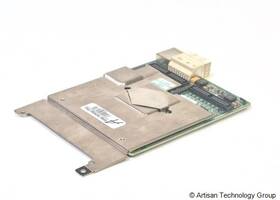
( Brand: Ni ), ( Manufacturer Part Number: 195906B-27L ), ( Part Type: Board ), ( Country Of Origin: United States )
Review NI Synchronization And Memory Core Board Parts
The **NI 1959-06B-27L Synchronization Memory Core Board** is a high-performance, modular component designed for integration into National Instruments **PXI Express** and **CompactPCI Express (cPCIe)** systems, serving as the backbone for advanced timing, synchronization, and memory management in demanding data acquisition, automation, and test applications. This board operates as a **synchronization core**, providing precise, low-latency coordination between multiple instruments, FPGA-based processing modules, and other high-speed peripherals within a distributed measurement system. Built on a robust **FPGA-based architecture**, the 1959-06B-27L delivers deterministic timing and event synchronization with sub-nanosecond accuracy, ensuring seamless synchronization across complex, multi-channel setups where timing jitter or drift could otherwise compromise measurement integrity.
At its core, this board features a **dedicated 27 MB of on-board SRAM memory**, optimized for storing and managing synchronization events, triggers, and timing references. This memory buffer enables real-time processing of high-speed signals, allowing for the precise alignment of data streams from multiple sources such as analog inputs, digital I/O, or FPGA-based modules without the need for external timing servers or additional synchronization hardware. The board s **dual-channel Time-Interval-Counter (TIC) subsystem** further enhances its capability by providing high-resolution timing measurements, enabling applications such as pulse width analysis, phase detection, and event-based triggering with unparalleled precision. Whether deployed in aerospace testing, automotive electronics validation, or high-frequency signal processing, the 1959-06B-27L ensures that critical timing relationships are maintained with minimal latency, even under the most demanding workloads.
Designed for seamless integration into **PXI Express or cPCIe backplanes**, this board adheres to rigorous industry standards for signal integrity and electromagnetic compatibility (EMC), ensuring reliable operation in both laboratory and field-deployed environments. Its **hot-swappable and plug-and-play architecture** simplifies system configuration, allowing engineers to dynamically adjust synchronization parameters without disrupting ongoing operations. Additionally, the board supports **NI LabVIEW, LabWindows/CVI, and other NI software frameworks**, enabling developers to programmatically configure timing parameters, monitor synchronization events, and optimize data acquisition workflows through intuitive graphical interfaces or scripted automation. With its combination of **high-speed memory management, deterministic timing, and modular scalability**, the NI 1959-06B-27L serves as an indispensable component for engineers and researchers seeking to build high-performance, synchronized measurement systems capable of handling the most complex and time-sensitive applications.
### **Pros and Cons of buying a NI 195906B-27L (Synchronization Memory Core Board)**
#### **Pros:**1. **Compatibility with NI CompactRIO and PXI Systems** This board is designed specifically for National Instruments modular platforms, ensuring seamless integration with existing hardware and software ecosystems.
2. **High-Speed Synchronization** The 27L model supports high-speed timing and synchronization, making it suitable for applications requiring precise coordination between multiple modules (e.g., data acquisition, control systems, or signal processing).
3. **FPGA-Based Processing** The board leverages FPGA technology, allowing for customizable logic and real-time processing, which is essential for advanced control and signal conditioning tasks.
4. **Backward and Forward Compatibility** Works with NI LabVIEW, LabVIEW FPGA, and other NI software tools, ensuring long-term usability and software support.
5. **Rugged and Reliable Design** Built for industrial and laboratory environments, offering durability in harsh conditions.
6. **Modular Expansion** Can be paired with other NI modules (e.g., DAQ, I/O, or communication boards) to build scalable systems.
7. **NI Support and Documentation** Access to NI s technical resources, driver updates, and community support for troubleshooting and optimization.
#### **Cons:**1. **High Cost** As a specialized hardware component, the price may be prohibitive for small-scale or budget-conscious projects.
2. **Learning Curve** Requires familiarity with NI software (especially LabVIEW FPGA) and FPGA programming, which may not be intuitive for beginners.
3. **Limited Standalone Use** Unlike general-purpose memory or I/O boards, this board is tightly coupled with NI s ecosystem, making it less flexible for non-NI systems.
4. **Depreciation Risk** Older NI hardware (like this model) may become obsolete over time as newer, more efficient alternatives emerge.
5. **Dependency on NI Software** If you re not already invested in NI tools, the transition cost (licensing, training) could be significant.
6. **Physical Space and Power Requirements** As part of a modular system, it occupies rack space and may require additional power supplies or cooling solutions.
7. **Potential for Overkill** If your application doesn t require FPGA-level synchronization (e.g., simple data logging), the complexity may not justify the cost.
---
### **Conclusion**
The **NI 195906B-27L Synchronization Memory Core Board** is a powerful tool for applications demanding high-precision timing, FPGA-based processing, and integration with NI s modular hardware. It excels in industrial automation, scientific research, and real-time control systems where synchronization and custom logic are critical. However, its high cost, steep learning curve, and ecosystem dependency make it less ideal for casual users or projects outside NI s framework.
If you re already working with **NI CompactRIO, PXI, or LabVIEW FPGA**, this board is a robust choice for advanced synchronization needs. For other use cases especially those requiring broader compatibility or lower cost alternative solutions (e.g., standalone FPGA boards, USB-based synchronization modules, or open-source alternatives) may be more practical.
---
### **Recommendation**
- **Buy if:**- You are part of an **NI-based system** (CompactRIO, PXI, or similar) and need **high-speed synchronization or FPGA customization**.
- Your project involves **real-time control, signal processing, or multi-module coordination** where timing accuracy is critical.
- You have **existing LabVIEW FPGA expertise** or are willing to invest in training.
- Budget constraints are not a limiting factor, and long-term system scalability is a priority.
- **Avoid if:**- You re working outside the **NI ecosystem** and need broader hardware compatibility.
- Your application doesn t require **FPGA-level processing** (simpler I/O or memory solutions may suffice).
- You re on a **tight budget** or lack experience with NI software/tools.
- The project is **small-scale or experimental**, and the board s cost/complexity outweighs its benefits.
For newer projects, consider evaluating **NI s latest synchronization modules** (e.g., updated 1959 series) or alternative FPGA platforms (e.g., Xilinx/Zynq-based boards) if backward compatibility isn t a requirement. Always compare the total cost of ownership, including software licensing and training, before purchasing.
Details:
NI 195906B-27L SynchroNization and Memory Core Board - Parts:: This uNit is an incomplete part of the Pixie-5442 it not fully functional. Are not included with this equipment unless pictured and/or listed in the above. Fast and hassle-free.
part #: 195906b27l price
- $3450.00
specifications linactuat:
- brand: Ni
- mpn: 195906b-27l
- part type: Board
- country of origin: United States
payments linactuat:
- credit card: Diners-club
- other
- wallet: Google-pay
offer linactuat:
- started: May 28, 2026
- sold: 0
- availability: In Stock
- quantity: 2
- options: Ship-to-home
general linactuat:
- condition: Used
- Industrial Automation Motion Controls > Rotary Linear Motion > Other Rotary Linear Motion
shipping linactuat:
- type: Calculated
- class: Standard, One-day, Economy
- carrier: FedEx
- service: FedEx Ground / FedEx Home Delivery, FedEx Standard OverNight, FedEx Ground Economy
- transit: 4-8 Days
- cost: $37.39
seller linactuat:
- # reviews: 17946
- rating: 99.8%
- city: Champaign, Illinois
returns linactuat:
- method: Money back
- paid by: Buyer
- time: 30 Days
- policy: Returns Accepted