PARKER DAEDAL 802-1209A Linear 802-1591A 215014-R1 B41
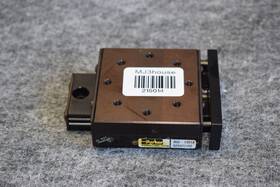
( Brand: Parker Daedal ), ( Manufacturer Part Number: 802-1209A ), ( Part Type: Linear ), ( Stroke Length: 25mm ), ( Country Of Origin: United States )
Review PARKER DAEDAL Linear Stage #215014-r1 B41
The Parker Daedal **802-1209A** and **802-1591A** linear actuators, paired with the **215014-R1** and **B41** components, represent a high-performance, precision-engineered solution designed for demanding industrial, material handling, and automation applications. These robust linear actuators are part of Parker Hannifin s Daedal line, renowned for their reliability, durability, and seamless integration into complex motion control systems. The **802-1209A** and **802-1591A** models are compact yet powerful, featuring a **2-inch (50.8 mm) bore diameter** and a **12-inch (304.8 mm) stroke length**, delivering a smooth, consistent motion with minimal friction. Constructed from high-quality materials, including hardened steel shafts and corrosion-resistant coatings, these actuators are engineered to withstand harsh environments, including exposure to dust, moisture, and temperature fluctuations, making them ideal for applications in manufacturing, packaging, automotive assembly, and robotic systems. The **215014-R1** component, likely a specialized bearing or mounting bracket, enhances the actuator s precision and stability, ensuring optimal alignment and load-bearing capacity, while the **B41** designation may refer to a specific mounting flange or adapter, allowing for flexible integration into existing machinery with minimal modifications. These actuators operate efficiently with Parker s proprietary **Daedal Drive** technology, which combines advanced sealing systems, low-friction bearings, and precise lubrication to maximize performance and extend service life. Whether used in high-speed indexing, material positioning, or automated conveyor systems, the **802-1209A/802-1591A** actuators provide a balance of strength, precision, and efficiency, making them a trusted choice for engineers and designers seeking dependable linear motion solutions. Their modular design further simplifies maintenance and customization, ensuring adaptability to a wide range of industrial applications.
### **Parker Daedal 802-1209A / 802-1591A Linear Actuator (215014-R1, B41) Pros and Cons**
#### **Overview**
The **Parker Daedal 802-1209A / 802-1591A** is a **hydraulic linear actuator** designed for heavy-duty industrial applications, including material handling, manufacturing, and automation. It is part of the **2150 Series**, known for reliability in demanding environments. Below is a detailed breakdown of its advantages and limitations.
---
### **Pros**
1. **High Load Capacity**
- The actuator is engineered to handle **significant axial loads**, making it suitable for heavy-duty applications such as clamping, pressing, or positioning large components. Its robust construction ensures stability under sustained loads.
2. **Precision and Repeatability**
- Parker Daedal actuators are known for **high positional accuracy** and **repeatability**, crucial for automated systems where consistency is critical. The **ball screw or lead screw mechanism** (depending on the variant) minimizes backlash and ensures smooth, controlled motion.
3. **Durability and Longevity**
- Built with **high-grade steel and corrosion-resistant coatings**, this actuator is designed for **extended operational life** in harsh environments, including exposure to dust, moisture, and temperature fluctuations. The **sealed housing** protects internal components from contaminants.
4. **Versatile Mounting Options**
- The actuator supports **multiple mounting configurations**, including flange, trunnion, and foot mounts, allowing for flexible integration into existing machinery. This adaptability simplifies retrofitting and customization.
5. **Energy Efficiency**
- Hydraulic systems, when properly designed, can be **more energy-efficient** than pneumatic alternatives for high-load applications. The **self-locking feature** (in some variants) reduces energy loss during holding operations.
6. **Maintenance-Friendly Design**
- Parker Daedal actuators are designed with **accessible components**, making routine maintenance (e.g., lubrication, seal replacement) easier. The **modular design** allows for quick repairs or upgrades without extensive downtime.
7. **Wide Range of Stroke Lengths**
- Available in various stroke lengths (from **short to extended travel**), the actuator can be tailored to specific application requirements, whether for compact machinery or large-scale operations.
8. **Compatibility with Parker s Ecosystem**
- As part of Parker s **Daedal brand**, this actuator integrates seamlessly with other Parker hydraulic components, such as pumps, valves, and cylinders, ensuring **system-wide reliability and performance**.
9. **Safety Features**
- Many variants include **overload protection** and **emergency stop capabilities**, enhancing operator safety in industrial settings.
10. **Global Support and Warranty**
- Parker is a **well-established brand** with extensive global support, including technical assistance, spare parts, and warranty coverage, reducing downtime risks.
---
### **Cons**
1. **High Initial Cost**
- Compared to **pneumatic actuators** or lower-end hydraulic alternatives, Parker Daedal actuators have a **higher upfront cost**. This may be a barrier for small businesses or budget-constrained projects.
2. **Complex Installation and Setup**
- Hydraulic systems require **proper fluid management, pressure regulation, and leak-proof connections**, which can complicate installation. Improper setup may lead to **inefficient performance or system failures**.
3. **Space Requirements**
- Due to their **bulkier design** compared to pneumatic or electric actuators, they may not be suitable for **space-constrained applications**. Proper clearance must be maintained for hydraulic lines and maintenance access.
4. **Maintenance Dependency**
- While designed for durability, hydraulic actuators **require regular maintenance**, including **fluid changes, filter replacements, and seal inspections**. Neglecting maintenance can lead to **premature wear or system failures**.
5. **Energy and Fluid Management Needs**
- Hydraulic systems consume **more energy** than electric or pneumatic alternatives, especially when operating at high pressures. Additionally, **hydraulic fluid leaks** can pose environmental and operational risks if not managed properly.
6. **Limited Speed for Some Applications**
- While capable of **high force**, hydraulic actuators may not offer the **highest speed** compared to electric or pneumatic counterparts. This could be a limitation in applications requiring rapid cyclic motion.
7. **Noise and Vibration**
- Hydraulic systems can generate **more noise and vibration** than electric or pneumatic systems, which may be a concern in **sensitive environments** (e.g., cleanrooms, precision manufacturing).
8. **Dependency on Hydraulic Fluid Quality**
- Contaminated or degraded hydraulic fluid can **reduce performance and lifespan**. Requires **strict filtration and fluid management protocols**.
9. **Potential for Leaks**
- Over time, **seals and fittings** may wear out, leading to **fluid leaks**, which can cause **system inefficiencies or environmental hazards**.
10. **Training Requirements**
- Operators and maintenance personnel may need **specialized training** to handle hydraulic systems effectively, increasing training costs.
---
### **Conclusion**
The **Parker Daedal 802-1209A / 802-1591A linear actuator** is a **superior choice for high-load, precision-driven industrial applications** where reliability, durability, and force are critical. Its **superior load capacity, precision, and longevity** make it ideal for **material handling, manufacturing, and automation** where other actuator types may fall short.
However, its **higher cost, complex installation, and maintenance requirements** may not justify its use in **low-load, cost-sensitive, or space-limited applications**. If **energy efficiency, speed, or simplicity** are priorities, alternatives like **pneumatic or electric actuators** might be more suitable.
For applications where **force, repeatability, and industrial robustness** are non-negotiable, this Parker actuator remains a **strong, long-term investment**.
---
### **Final Recommendation**
**Buy the Parker Daedal 802-1209A / 802-1591A if:**You require **high axial force** (e.g., heavy clamping, pressing, or positioning).
**Precision and repeatability** are essential for your application.
Your environment is **industrial-grade** (dust, moisture, temperature variations).
You have **budget flexibility** for a **premium hydraulic solution**.
Long-term **durability and low maintenance costs** are priorities.
**Consider alternatives (e.g., pneumatic, electric, or lower-cost hydraulic actuators) if:**Your application requires **high speed or rapid cycling**.
**Budget constraints** make the upfront cost prohibitive.
Your workspace is **limited in size** and requires compact actuators.
You lack **experienced hydraulic maintenance personnel**.
For most **heavy-duty industrial automation needs**, this Parker actuator is a **reliable, high-performance choice** provided proper installation, maintenance, and operational protocols are followed.
Details:
#215014-R1 B41. All return shipping charges must be prepaid by the customer. Used, Good Working Condition.
part #: 8021209a prices
- $49.99-$69.99
specifications linactuat:
- brand: Parker Daedal
- mpn: 802-1209a
- part type: Linear
- stroke length: 25mm
- country of origin: United States
offer linactuat:
- best offers: True
- quantity: 2
- availability: In Stock
- sold: 0
- options: Ship-to-home
- started: March 11, 2026
returns linactuat:
- policy: No Returns
shipping linactuat:
- service: USPS Ground Advantage
- class: Standard
- carrier: USPS
- transit: 5-12 Days
- cost: $10.50
- type: Calculated
seller linactuat:
- city: Moreno Valley, California
- rating: 100.0%
- # reviews: 1330
payments linactuat:
- wallet: Google-pay
- credit card: Visa
- other
general linactuat:
- condition: Used
- Industrial Automation Motion Controls > Rotary Linear Motion > Linear Actuators
Parker Daedal 802-1209A Is Similar To:
- 004959501 Parker Daedal Heavy Load Cross Rolling Linear Rail (43% similar) Parker Daedal heavy load cross rolling linear slide rail model CR4801, part CRW2-IKO, roller, long life, removed from equipment, 30-DAY warranty condition: used item: location: 9004D...(March 8th, 2018)
- 008-7674-d Parker Linear Stage Actuator (42% similar) ...(November 12th, 2017)
- 008-8748 Parker Daedal With Two Emerson Servo Motors (38.9% similar) See pictures. Parker Daedal with two Emerson DXM208C 5000 rpm servo motors attached to them...(May 27th, 2018)
- 081-0570-01 Parker Daedal Division 500000et (36.5% similar) This unit is equipped with a very heavy duty, zero backlash compound ball nut that adjustable. It does show some handling scratches, but is very, very clean. This slide would be perfect as one of the axis in a heavy duty CBC router or laser system. I try to ensure that all business deals are fair, ...(January 12th, 2018)
- 081-1280 Parker Positioning Stage Travel Dimensions (32.1% similar) Need this item next day. Our cut-off time for shipping an item is 3:45PM ct. Messaging: through messages...(May 4th, 2018)
- 081-5820 S57-83-mo Parker Daedal Screw (32.3% similar) Our cut-off time for shipping an item is 3:45PM ct...(November 3rd, 2017)
- 081-8220 Parker Daedal 30 X (36.4% similar) One Parker Daedal 2 axis linear positioned, 30 x model with computer ZETA83-135-MD on each e-ac drives. Happy buying...(November 6th, 2017)
- 105002btepd3lc4m1e1 Parker Precision Linear Slide Table Optical Limit Sensors And Bonusitem (28.9% similar) Unfortunately they didn't come to me with the bellows coupling. Parker ball bearing 5 slide table 2 travel this has all the bells and whistles for its class precision level ACCURACY0. I am including the 9-PIN connector and female pins yes, extra for when you mess up if are like me. Motor mount for 1...(November 29th, 2018)
- 105021p-10 Parker Daedal Precision Linear (41.2% similar) ...(September 28th, 2017)
- 105021s10blh0 Parker Daedal Leadscrew Linear Position Actuator Table Stage Stroke (42.3% similar) Our cut-off time for shipping an item is 3:45PM ct. Need this item next day. Messaging: through messages. If you do not have an account no worries...(June 12th, 2018)
- 106004ctep-d1l2c4m1e1 Parker Daedal Precision Crossed Roller Slide Table (30.1% similar) Up for sale is a Parker Daedal precision crossed roller slide table. The full part number is 106004CTEP-D1L2C4M1E1. Guaranteed not DOA. The table is 6 x6 and has 4 of travel...(December 26th, 2018)