PHD 88196 Optimax Pneumatic Rotary Table Actuator Sensors Automation
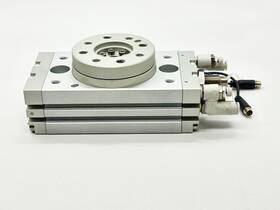
( Brand: Phd ), ( Manufacturer Part Number: 88196 ), ( Part Type: Pneumatic Actuator Table Sensor ), ( Unit Type: Unit )
Review PHD Optimax Pneumatic Rotary Table Actuator Pnp Sensors Industrial Automation
The **PH-D 88196 Optimax Pneumatic Rotary Table Actuator with Integrated Sensors** represents a cutting-edge solution in automation technology, designed to deliver precise, high-performance rotational motion control for industrial applications requiring seamless integration with pneumatic systems. Engineered with advanced engineering principles, this compact yet robust actuator combines the efficiency of pneumatic actuation with the reliability of digital feedback, making it an ideal choice for automated assembly lines, material handling systems, indexing applications, and custom manufacturing processes. The Optimax series leverages a high-torque, low-friction design, featuring a durable aluminum or stainless steel housing to ensure longevity even in demanding environments where exposure to dust, moisture, or temperature fluctuations is common. Its modular construction allows for easy customization, accommodating a wide range of rotational ranges from partial turns to full 360-degree rotations while maintaining consistent performance across varying load capacities.
At the heart of this actuator lies a sophisticated **pneumatic rotary mechanism**, driven by a high-efficiency cylinder that converts compressed air into smooth, controlled rotational motion with minimal backlash. The system incorporates a **proportional valve interface**, enabling precise speed and torque adjustments through electronic control, which enhances positional accuracy and reduces energy consumption. To further elevate its functionality, the PH-D 88196 is equipped with **integrated sensor technology**, including high-resolution **absolute or incremental encoders**, Hall-effect sensors, or limit switches, depending on the configuration. These sensors provide real-time feedback on position, speed, and direction, allowing for closed-loop control and seamless integration with PLCs, CNC systems, or SCADA platforms. The actuator s **digital communication protocols**, such as Profibus, CANopen, or Modbus, ensure compatibility with modern industrial automation networks, facilitating data exchange and remote monitoring for enhanced operational efficiency.
Safety and reliability are prioritized in the design of the Optimax actuator, with features such as **overload protection**, **emergency stop compatibility**, and **fail-safe mechanisms** to prevent damage or operational errors. The unit s **sealed bearing system** minimizes wear and tear, extending the lifespan of the actuator even in continuous operation scenarios. Additionally, the actuator s **low-maintenance construction** reduces downtime, as it eliminates the need for frequent lubrication or adjustments, while its **compact footprint** optimizes workspace utilization in tight manufacturing environments. Whether deployed in high-speed packaging systems, robotic assembly cells, or precision machining applications, the PH-D 88196 Optimax actuator delivers a harmonious blend of power, precision, and adaptability, setting a new standard for pneumatic rotary motion in automation.
**Pros and Cons of buying a PHD 88196 Optimax Pneumatic Rotary Table Actuator with Sensors for Automation**
### **Pros**
1. **Precision and Accuracy** The Optimax series is known for high-precision positioning, making it suitable for applications requiring exact rotational control. The pneumatic drive ensures smooth, repeatable motion with minimal backlash.
2. **High Torque Capacity** The model supports significant torque loads, allowing it to handle heavy-duty automation tasks such as indexing, material handling, or assembly operations without compromising stability.
3. **Pneumatic Operation** Air-powered actuators offer several advantages over electric or hydraulic alternatives:- **Quick response time** for rapid cycling in automated processes.
- **No electrical hazards**, reducing safety risks in industrial environments.
- **Low maintenance** compared to hydraulic systems, as they rely on compressed air rather than fluids.
4. **Integrated Sensors** The inclusion of sensors (likely position feedback, limit switches, or proximity sensors) enhances automation capabilities by enabling real-time monitoring and control. This improves process reliability and reduces manual intervention.
5. **Durability and Longevity** Built for industrial use, the PHD Optimax is designed to withstand harsh conditions, including dust, moisture, and temperature variations, ensuring long-term performance.
6. **Compatibility with Automation Systems** The actuator is likely designed to integrate seamlessly with PLCs, CNC systems, or other industrial control platforms, making it versatile for various automation setups.
7. **Energy Efficiency** Pneumatic systems can be more energy-efficient in applications where rapid, intermittent motion is required, as they do not consume power when stationary (unlike electric motors).
8. **Customization Options** PHD offers various configurations for mounting, stroke length, and sensor types, allowing tailoring to specific application needs.
---
### **Cons**
1. **Dependence on Compressed Air Supply** The actuator requires a stable and properly maintained pneumatic system. Fluctuations in air pressure or supply interruptions can affect performance, potentially causing delays or inaccuracies.
2. **Noise and Vibration** Pneumatic actuators can generate noticeable noise and vibration during operation, which may be a concern in noise-sensitive environments or where precision is critical.
3. **Limited Continuous Operation** Unlike electric motors, pneumatic actuators may experience wear over prolonged continuous use due to air compression cycles. This could shorten the lifespan if not properly maintained.
4. **Higher Initial Cost for Pneumatic Infrastructure** While the actuator itself may be cost-effective, setting up or upgrading a pneumatic system (compressors, filters, regulators) can be expensive, especially for small-scale operations.
5. **Temperature Sensitivity** Extreme temperatures can affect pneumatic performance, as air viscosity and pressure dynamics change with ambient conditions. This may require additional climate control or compensation in some applications.
6. **Less Suitable for High-Speed Continuous Rotation** While pneumatic actuators excel in indexing or intermittent motion, they are not ideal for continuous high-speed rotation (e.g., spindle applications), where electric servomotors may be more efficient.
7. **Sensor Reliability** The integrated sensors must be regularly calibrated and maintained to ensure accurate feedback. Failure or drift in sensors can lead to control errors, requiring additional monitoring.
8. **Space Requirements** Pneumatic systems often require additional space for air lines, valves, and regulators, which may not be feasible in compact automation setups.
---
### **Conclusion**
The **PHD 88196 Optimax Pneumatic Rotary Table Actuator with Sensors** is a robust and precise solution for automation applications requiring high torque, rapid indexing, and reliable position control. Its pneumatic operation offers advantages in speed, safety, and low maintenance, making it ideal for industrial environments where these factors are critical. However, the reliance on compressed air, potential noise issues, and the need for proper pneumatic infrastructure are drawbacks that must be carefully considered.
For applications where **intermittent, high-torque rotational motion** is needed such as in material handling, assembly lines, or CNC indexing the Optimax is a strong choice. Conversely, if **continuous rotation, high-speed operation, or minimal noise** are priorities, an electric servomotor or hydraulic actuator might be more suitable.
---
### **Recommendation**
**Purchase the PHD 88196 Optimax if:**- Your automation process involves **intermittent, high-torque rotational movements** (e.g., indexing, clamping, or positioning).
- You already have or can easily establish a **reliable pneumatic system** with proper filtration and pressure regulation.
- **Precision and repeatability** are critical, and the integrated sensors enhance control accuracy.
- **Low maintenance and safety** (no electrical hazards) are key considerations for your workspace.
**Consider alternatives if:**- Your application requires **continuous high-speed rotation** (electric servomotors may be better).
- **Noise reduction** is a priority, and pneumatic actuators would be intrusive.
- You lack the infrastructure for **compressed air supply**, making electric or hydraulic solutions more practical.
- **Energy efficiency** is a major concern for long-duration operations, as pneumatic systems may not be optimal.
**Final Suggestion:** Conduct a detailed cost-benefit analysis comparing the **purchase price, operational efficiency, and long-term maintenance** of the Optimax against other actuator types. If the application aligns well with its strengths, the PHD 88196 Optimax is a **highly capable and durable choice** for automation. Otherwise, consult with automation engineers to explore hybrid or alternative solutions.
Details:
Brand: PHD Series: Optimax Type: Pneumatic rotary table / actuator Actuation: Sensor type: PNP solid state model: 88196 rating: DC 4.5 28V, 50mA Configuration: Rotary with mounting face and sensor wiring Material: Aluminum body machined metal condition: Used Country/Region of Manufacture: Unknown model: Exact model not visible in photos.
part #: 88196 price
- $165.00
specifications linactuat:
- brand: Phd
- mpn: 88196
- part type: Pneumatic Actuator Table Sensor
- unit type: Unit
offer linactuat:
- quantity: 1
- sold: 0
- started: April 10, 2026
- availability: In Stock
- options: Ship-to-home
shipping linactuat:
- type: Fixed
- service: USPS Ground Advantage
- carrier: USPS
- class: Standard
- transit: 4-10 Days
- cost: $0.00
general linactuat:
- Industrial Automation Motion Controls > Rotary Linear Motion > Rotary Actuators
- condition: Used
seller linactuat:
- # reviews: 197
- city: San Diego, California
- rating: 98.2%
returns linactuat:
- policy: Returns Accepted
- paid by: Seller
- time: 30 Days
- method: Money back
payments linactuat:
- other
- wallet: Apple-pay
- credit card: Visa
Phd 88196 Is Similar To:
- 0180-75-1-1-1 Phd New Actuator (23.7% similar) New in opened box...(December 21st, 2018)
- 0180502-3-02 Phd Inc Hydraulic Pneumatic Actuator Assembly With Platter (44% similar) ...(March 7th, 2019)
- 0452904102 Phd New Rotary Air (27.4% similar) See pictures for measurements. Model number new Phd rotary actuator...(October 6th, 2017)
- 19082-1-5002 Phd New Pneumatic Parallel Gripper Ser (40.3% similar) New Phd pneumatic parallel gripper sear shipped with USPS priority mail...(March 3rd, 2019)
- 32x180-ab-m Phd New Bore Rotation Pneumatic Rotary Actuator (44.9% similar) 30-DAY DOA warranty this product carries. All parts, accessories, cables, etc. All parts, including accessories and cables are only included if pictured or listed in the. Your satisfaction is extremely important to us. Standard shipping prices are only good for the lower 48 states. Please review ...(February 8th, 2019)
- 60335-04 Phd Rotary Actuator New (35% similar) Ships same day. This is a new item still in the package...(January 20th, 2019)
- Avb3-4x1-4 Phd Pneumatic Cylinder Used (33.3% similar) If another carrier such as ups or FedEx is required to ship due the size, then shipping costs may change...(December 8th, 2018)
- Hvp1-1-8x2 Phd Pneumatic Cylinder New No Box (34.8% similar) If another carrier such as ups or FedEx is required to ship due the size, then shipping costs may change...(October 17th, 2018)
- Knox0201693-r11a8210-a-m Phd Pneumatic Rotary Actuator Used (43.5% similar) If another carrier such as ups or FedEx is required to ship due the size, then shipping costs may change...(November 4th, 2018)
- Knox90016458-hvr11-8x5 1-2r0d Phd Pneumatic Cylinder Used (29% similar) If another carrier such as DHL or ups is required to ship due certain shipping requirements, then the costs and requested may change...(January 19th, 2019)
- M-pb-q1 Phd Linear Guided Slide Cylinder Table (23.9% similar) I ship by ups or USPS...(June 18th, 2018)