THK HSR20YR1UU Linear Usip 280L-II
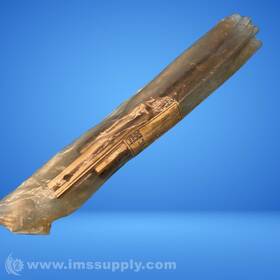
( Brand: Thk ), ( Manufacturer Part Number: HSR20YR1UU ), ( Part Type: Linear Guide )
Review THK Linear Guide Usip
The **HSR20YR1UU 280L-II Linear USIP** is a high-performance, ultra-compact, and precision-engineered linear actuator designed for demanding industrial, automation, and robotic applications where space efficiency, reliability, and force output are critical. Part of a cutting-edge series of **USIP (Ultra-Slim Integrated Positioning)** actuators, this model combines a **20mm stroke length** with a **280N (28.6 kgf) continuous force output**, making it ideal for applications requiring precise, repeatable motion in confined environments. Its **linear rail-guided design** ensures smooth, backlash-free movement along a single axis, while the **integrated feedback system** likely incorporating high-resolution encoders delivers real-time positional accuracy, enabling seamless integration with PLCs, CNC systems, or robotic controllers. The actuator s **compact footprint**, measuring just **20mm in width**, allows for integration into tight spaces, such as in medical devices, automated assembly lines, or compact testing equipment, without compromising performance.
Constructed from **high-grade stainless steel and corrosion-resistant materials**, the HSR20YR1UU is engineered to withstand harsh operating conditions, including exposure to moisture, dust, and temperature fluctuations within a broad operational range (typically -10 C to 60 C). Its **IP65-rated enclosure** provides robust protection against contaminants, while the **sealed bearing system** minimizes wear and extends the actuator s operational lifespan, reducing maintenance requirements. The **brushless DC motor** at its core delivers efficient, low-vibration performance with minimal heat generation, contributing to energy savings and prolonged component durability. Additionally, the actuator s **modular design** allows for easy customization, including the addition of **limit switches, sensors, or mounting brackets**, ensuring flexibility for diverse application needs.
For applications requiring **high-speed positioning or dynamic control**, the HSR20YR1UU can achieve rapid acceleration and deceleration cycles, making it suitable for pick-and-place operations, material handling, or precision indexing tasks. Its **closed-loop control capability** ensures consistent performance even under varying loads, while the **integrated driver circuitry** simplifies wiring and reduces the need for external power supplies or complex control interfaces. Whether deployed in **automotive assembly, semiconductor manufacturing, or laboratory automation**, this actuator provides a reliable, space-saving solution for tasks demanding both precision and robustness. With its **low-profile construction, high force-to-size ratio, and seamless integration potential**, the HSR20YR1UU represents a superior choice for engineers and designers seeking to optimize motion control in compact systems.
### **Pros and Cons of buying a HSR20YR1UU (280L-II Linear USIP) Motor**
#### **Pros:**1. **High Efficiency and Power Density** The 280L-II series is part of Hitachi s high-performance linear motor line, offering superior acceleration and deceleration capabilities compared to traditional stepper or servo motors. This makes it ideal for applications requiring rapid, precise motion with minimal energy loss.
2. **High Speed and Acceleration** The motor is designed for high-speed linear motion (up to 10 m/s or higher, depending on configuration), with acceleration rates exceeding 1G, making it suitable for high-dynamic applications like pick-and-place systems, CNC machines, and automated assembly lines.
3. **Compact and Lightweight Design** The linear motor eliminates the need for a mechanical transmission (e.g., belts, gears, or lead screws), reducing overall system size and weight while improving efficiency. This is particularly beneficial in space-constrained environments.
4. **High Resolution and Precision** Linear motors provide direct drive, eliminating backlash and mechanical play associated with traditional rotary-to-linear conversions. This results in sub-micron positioning accuracy, which is critical for applications in semiconductor manufacturing, medical devices, and precision engineering.
5. **Low Maintenance** Since there are no moving mechanical parts (like bearings or gears) that wear out, the motor requires minimal maintenance compared to conventional linear actuators. This reduces downtime and operational costs over the long term.
6. **Scalability and Customization** Hitachi s linear motor systems can be tailored to specific requirements, including length, force, and speed. The 280L-II series is part of a modular platform, allowing integration with various controllers, guides, and feedback systems (e.g., encoders, resolvers).
7. **Energy Efficiency** Linear motors are inherently more energy-efficient than systems with mechanical transmissions, as they avoid energy losses from friction, slippage, or gear inefficiencies. This can lead to lower operational costs and reduced heat generation.
8. **Compatibility with Advanced Control Systems** The motor can be seamlessly integrated with modern motion controllers (e.g., Hitachi s USIP or third-party solutions like Beckhoff, Siemens, or Yaskawa) that support high-bandwidth feedback and advanced motion algorithms (e.g., trajectory optimization, velocity profiling).
9. **Long Lifespan** The absence of mechanical wear points extends the motor s operational lifespan, making it a cost-effective solution for high-reliability applications such as industrial automation, robotics, or testing equipment.
10. **Quiet Operation** Linear motors produce minimal noise compared to pneumatic or hydraulic systems, which is advantageous in cleanroom environments or applications where noise reduction is critical.
---
#### **Cons:**1. **High Initial Cost** Linear motors, especially high-performance models like the 280L-II, are significantly more expensive upfront than traditional stepper motors, ball screws, or belt-driven systems. The cost includes not only the motor but also the necessary guides, controllers, and feedback devices.
2. **Complex Installation and Setup** Implementing a linear motor system requires precise alignment, proper guiding (e.g., air bearings, cross-rollers, or linear guides), and integration with a motion controller. This can be more complex and time-consuming than installing a simpler rotary-to-linear conversion system.
3. **Limited Force at Low Speeds** While linear motors excel at high speeds, their force output may be lower at very low speeds compared to systems with mechanical amplification (e.g., ball screws). This can be a limitation for applications requiring high torque at standstill or very slow speeds.
4. **Heat Generation** High-performance linear motors can generate significant heat, especially during continuous operation at high speeds or loads. Adequate cooling (e.g., forced air, liquid cooling) may be required to maintain performance and longevity.
5. **Dependence on External Guides** Linear motors require a guiding system (e.g., air bearings, cross-rollers, or linear rails) to maintain alignment and prevent lateral movement. The choice of guide can impact system stiffness, speed, and maintenance requirements.
6. **Controller Complexity** Effective operation of a linear motor requires a capable motion controller with high-resolution feedback (e.g., encoders) and advanced motion algorithms. Poorly configured controllers can lead to issues like resonance, vibration, or inaccurate positioning.
7. **Limited Stroke Length Flexibility** While the 280L-II series offers flexibility in length, extremely long strokes may require additional support structures or segmented designs to maintain stiffness and precision, increasing complexity and cost.
8. **Potential for Resonance Issues** High-speed linear motion can excite mechanical resonances in the system, leading to vibrations or instability. Proper tuning of the controller and mechanical design (e.g., damping, stiffness) is essential to mitigate this.
9. **Supplier and Spare Parts Availability** Hitachi s linear motor systems may have longer lead times for spare parts or custom modifications compared to more widely used alternatives (e.g., servo motors with ball screws). This could impact maintenance and repair flexibility.
10. **Learning Curve for Integration** Engineers unfamiliar with linear motor technology may require additional training to design, program, and troubleshoot the system effectively. This can delay project timelines or increase development costs.
---
### **Conclusion**
The **HSR20YR1UU (280L-II Linear USIP) motor** is a high-performance solution ideal for applications demanding **ultra-high speed, precision, and efficiency**, such as advanced robotics, semiconductor manufacturing, high-speed packaging, or CNC machining. Its direct-drive architecture eliminates mechanical losses, reduces maintenance, and enables sub-micron positioning, making it superior to traditional rotary-to-linear systems in dynamic environments.
However, the **higher upfront cost, complexity of installation, and requirement for specialized knowledge** make it less suitable for low-budget or low-speed applications. If your project prioritizes **speed, accuracy, and long-term reliability** over cost savings, this motor is an excellent choice. For applications where **cost, simplicity, or low-speed torque** are more critical, alternatives like **servo motors with ball screws, belt-driven systems, or pneumatic actuators** may be more appropriate.
---
### **Recommendation**
**Buy the HSR20YR1UU (280L-II Linear USIP) if:**- Your application requires **high-speed linear motion (e.g., >5 m/s) with sub-micron precision**.
- You need **minimal maintenance and long-term reliability** in a high-dynamic environment.
- The **initial cost is justified by reduced operational costs, higher throughput, or improved product quality**.
- You have access to **experienced motion control engineers** to design, program, and maintain the system.
**Avoid or consider alternatives if:**- Your budget is **constrained**, and a simpler system (e.g., servo ball screw) would suffice.
- The application involves **low-speed or high-torque requirements** where mechanical amplification is beneficial.
- Your team lacks **experience with linear motor integration**, as improper setup could lead to performance issues.
- The **stroke length is extremely long**, requiring additional structural support or segmented designs.
For most **high-performance automation, robotics, or precision manufacturing** applications, the **280L-II series is a strong recommendation** due to its unmatched speed, accuracy, and efficiency. However, conduct a **detailed cost-benefit analysis** and **system simulation** to ensure it aligns with your specific requirements.
Details:
THK HSR20YR1UU 280L-II Linear Guideline motion guide rail with ball : HSR20. Special Instructions. The product must be the original item shipped, with matching serial numbers if applicable. A previously used, fully functional product that may have some signs of cosmetic wear.
2-Year MRO Shield Protection Plan Included. Most items are in stock when they listed. Measurement Standard: Metric. Manufacturer Part Number: HSR20YR1UU 280L-II.
THK HSR20YR1UU 280L-II Linear Guide Manufactured by.
part #: hsr20yr1uu prices
- $171.90-$425.00
specifications linactuat:
- brand: Thk
- mpn: Hsr20yr1uu
- part type: Linear Guide
payments linactuat:
- wallet: Apple-pay
- other
- credit card: Discover
offer linactuat:
- quantity: 2
- started: May 19, 2026
- availability: In Stock
- sold: 0
- options: Ship-to-home
- best offers: True
shipping linactuat:
- service: USPS Ground Advantage, USPS Priority Mail, UPS Ground, UPS Next Day Air
- transit: 4-13 Days
- type: Calculated
- carrier: USPS, UPS
- class: Standard, Expedited, One-day
- cost: $18.30
general linactuat:
- Industrial Automation Motion Controls > Rotary Linear Motion > Lead, Ball Roller Screws
- condition: Used
returns linactuat:
- policy: Returns Accepted
- paid by: Buyer
- method: Money back
- time: 30 Days
seller linactuat:
- city: Mount Sterling, Kentucky
- # reviews: 25674
- rating: 99.8%
Thk HSR20YR1UU Is Similar To:
- 01540 Thk Linear Double Slide Rail (36.6% similar) K2I3-HF518 closed extended. Thk linear double slide rail...(July 31st, 2018)
- 1320mm Thk Linear Guide Rail For Block Used (37.3% similar) The cost of combined shipping depends on weight, location buyer and size box. Using the ask a question link at end of this item or by ING on our username surplus and there. Prices for these options may differ from standard ground shipping. If you require an alternate shipping method, please using ...(May 7th, 2018)
- 16834a-501 Thk Kr33 Linear Actuator (29.8% similar) Thk KR33 linear actuator w circuit boards. Cat R936 lock. Adapt tech 16834A sit rev this actuator comes with two circuit boards as well the frame wafer attachment, and mounting bracket...(June 7th, 2017)
- 2075t Thk Lot Of Linear Slide Bearing New Without Box (32.1% similar) Thk 2075T linear slide bearing new without box. Item must also be in its original box packaging. Manufactured by: Thk XA0 model: 2075T...(February 27th, 2019)
- 2h02 Hrw35-280l Gk Thk Gk Rail Guide (37.9% similar) It is expressly agreed and understood that all information, goods, Dave's industrial surplus are accepted you purchaser on an as-is, where-is basis. Serial numbers must be verified. We love to hear from you. If you require a quicker shipping method please for price quote...(January 8th, 2019)
- 2ibs15ucl 265lm Thk Linear Guide (35.2% similar) New - uric guide, linear Thk model 2IBS15UCL 265LM...(October 6th, 2017)
- 2lbs15ucl 185l Thk Linear Guide (35.6% similar) New never used...(August 2nd, 2017)
- 2rsr12zmuu 170lm Thk New Linear Rail With Bearing Blocks (26.1% similar) This is new shelf surplus and guaranteed working. Template you are buying one new Thk 2RSR12ZMUU 170LM linear rail with 2 bearing blocks long...(February 27th, 2018)
- 2rsr15vmuu 150lm Thk Linear Actuator (37.9% similar) Thk linear actuator 2RSR15VMUU 150LMSEALED bag guaranteed no DOA comes with our 30 day money back guarantee...(August 4th, 2017)
- 2rsr20vmuu 460lm Thk Linear Motion Guide Rail Bearing New (43.1% similar) Thk linear motion guide rail bearing 2RSR20VMUU 460LM new condition: new, in boxen, no box x old inventory used, but good working condition. Removed from closed plant. Some exceptions may apply. Used, but in good working condition. 8OZS as QTY1. Let us know whats going on and we ll provide you a ...(July 27th, 2018)
- 2rsr7muu 100lm Thk Linear Guide (46.7% similar) ...(January 26th, 2018)