PARKER LCR30LN0201 Linear Actuator Ballscrew Lead Nema 2MM 100MM
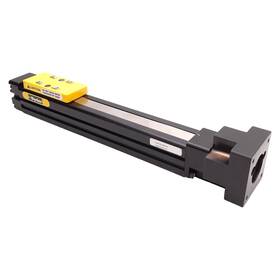
( Brand: Parker ), ( Manufacturer Part Number: LCR30LN0201 ), ( Part Type: Actuator Linear )
Review PARKER Linear Actuator 2mm Ballscrew Lead 100mm Stroke Nema
The **Parker LCR30LN0201 Linear Actuator** is a precision-engineered, high-performance motion control solution designed for applications requiring smooth, repeatable linear movement with exceptional reliability. This compact yet robust actuator combines Parker s industry-leading expertise in motion systems with a **2mm pitch ballscrew mechanism**, delivering a **100mm stroke length** with remarkable accuracy and minimal backlash. Built around a **Nema 17 hybrid stepper motor**, the actuator integrates seamlessly into automated systems where space efficiency and performance are critical. The ballscrew drive ensures smooth, vibration-free motion with low friction, making it ideal for applications such as CNC machining, robotics, medical devices, and industrial automation where precision positioning is essential. The actuator s lightweight yet durable construction featuring a rigid aluminum housing enables high-speed operation while maintaining structural integrity under repeated cycles. Its modular design allows for easy integration into existing control systems, supported by Parker s comprehensive range of drivers, controllers, and software interfaces. Whether used in prototyping, production lines, or research applications, this actuator provides a balance of precision, durability, and versatility, making it a standout choice for engineers and designers demanding consistent, high-performance linear motion.
**Pros and Cons of buying a Parker LCR30LN0201 Linear Actuator (2mm Ballscrew, 100mm Lead, NEMA 17)**
### **Pros**
1. **High Precision and Repeatability** The 2mm ballscrew offers fine control with minimal backlash, making it ideal for applications requiring exact positioning, such as CNC machines, 3D printers, or automated assembly lines. The 100mm lead ensures smooth, incremental movement with minimal error.
2. **Durability and Reliability** Parker is a well-established manufacturer known for industrial-grade components. This actuator is built for heavy-duty use, with a robust design that can withstand frequent operation and load variations. The NEMA 17 stepper motor integration ensures consistent performance over time.
3. **Compatibility with Stepper Motors** The inclusion of a NEMA 17 motor simplifies integration into existing systems that already use this standard. It allows for easy control via step/direction drivers or microcontrollers (e.g., Arduino, Raspberry Pi, or dedicated motion controllers).
4. **Low Friction and Efficiency** Ballscrew mechanisms reduce friction compared to lead screws, improving energy efficiency and reducing wear. This translates to longer lifespan and lower maintenance requirements.
5. **Modular and Customizable** The actuator can be paired with various mounting options, end-of-travel switches, or feedback sensors (e.g., encoders) depending on application needs. Parker provides technical support and documentation to aid in customization.
6. **Industrial-Grade Quality** Suitable for environments with moderate to high demands, such as workshops, robotics, or automated testing equipment. The sealed design protects against dust and light contamination.
7. **Good Load Capacity** The 30mm diameter (as inferred from the model name) suggests a reasonable static and dynamic load capacity, making it versatile for light to medium-duty applications (e.g., moving tools, fixtures, or small components).
8. **Widely Available Support** Parker has a strong global distribution network, making parts and technical assistance accessible. Many online retailers and industrial suppliers stock this model or similar alternatives.
---
### **Cons**
1. **Higher Upfront Cost** Compared to generic or aftermarket linear actuators, Parker s industrial-grade components come at a premium. The cost may be prohibitive for hobbyists or low-budget projects.
2. **Complexity in Setup** Requires proper alignment, lubrication, and calibration, especially when integrating with a stepper motor and driver. Beginners may need additional guidance or time to configure it correctly.
3. **Limited Stroke Length** The 100mm lead means each full rotation moves the actuator by 100mm. While this is sufficient for many applications, it may require multiple revolutions for longer travel, which could introduce cumulative errors or mechanical limitations.
4. **Maintenance Requirements** Although low-friction, ballscrews still require periodic lubrication to prevent wear. Neglecting maintenance can lead to reduced performance or failure over time.
5. **Power and Driver Considerations** The NEMA 17 motor may require a compatible stepper driver (e.g., TMC2209, DRV8825) with sufficient current (typically 1.2A 2A) to handle the load without overheating. Oversizing the driver can waste power, while undersizing may cause stalling.
6. **Space Constraints** The actuator s length and mounting requirements may not fit in compact designs. Ensure your application has adequate clearance for installation and movement.
7. **Potential for Resonance** High-speed operation near the actuator s natural frequency can cause vibrations or instability. Tuning the motor s microstepping and acceleration/deceleration settings may be necessary to avoid this.
8. **Limited Customization for Extreme Conditions** While robust, this actuator may not be ideal for harsh environments (e.g., extreme temperatures, high humidity, or corrosive atmospheres) without additional sealing or modifications.
---
### **Conclusion**
The **Parker LCR30LN0201** is an excellent choice for applications demanding **precision, reliability, and durability**, particularly in industrial, CNC, or automated systems where consistency is critical. Its compatibility with NEMA 17 motors and modular design makes it versatile for integration into existing setups. However, the **higher cost, setup complexity, and maintenance needs** may not justify its use for simple or low-budget projects.
For **hobbyists or small-scale users**, alternatives like **generic 24V linear actuators, lead screw-based designs, or lower-cost brands** (e.g., THK, Hiwin, or aftermarket ballscrews) might offer comparable performance at a fraction of the price. Conversely, for **professional or high-stakes applications** (e.g., medical devices, aerospace components, or high-precision manufacturing), the Parker actuator s quality and support make it a worthwhile investment.
---
### **Recommendation**
- **Buy it if:**- You need **high precision and repeatability** in an industrial or semi-professional setting.
- Your project involves **CNC machining, robotics, or automated assembly** where reliability is non-negotiable.
- You already use **NEMA 17 motors** and want a seamless integration.
- You can justify the **higher cost** based on long-term performance and reduced downtime.
- **Consider alternatives if:**- You re working on a **budget-conscious hobby project** (e.g., 3D printer upgrades, small CNC mills).
- You need **longer stroke lengths** or **simpler designs** (e.g., rack-and-pinion or belt-driven actuators).
- Your environment is **extremely harsh** (e.g., high dust, moisture, or temperature fluctuations), as additional sealing may be required.
- **Tips for Purchase:**- Verify compatibility with your **stepper driver and power supply** to avoid overheating or stalling.
- Check for **warranty and local support** from Parker or authorized distributors.
- If possible, **test a prototype** or consult with an engineer to optimize settings (e.g., microstepping, acceleration profiles).
- Explore **used or refurbished units** if cost is a concern, though ensure they are in good condition.
For most **serious applications**, the Parker LCR30LN0201 is a **strong, well-supported choice** but weigh its pros and cons carefully against your specific needs.
Details:
Specifications: model #: LCR30LN0201, LCR30LN0201. Lead: 2mm Ballscrew. Address, Next Day Automation, 9472 Hemlock Lane N. If you do not have an account No Worries.
This is a surplus item. Mounting: NEMA 17. Parker Linear Actuator.
part #: lcr30ln0201 price
- $200.00
specifications linactuat:
- brand: Parker
- mpn: Lcr30ln0201
- part type: Actuator Linear
shipping linactuat:
- type: Calculated
- carrier: USPS, UPS
- service: USPS First Class, USPS Priority Mail Padded Flat Rate Envelope, UPS Next Day Air
- class: Standard, Expedited, One-day
- cost: $0.00
- transit: 2-5 Days
payments linactuat:
- cash
- credit card: Visa
- other
- wallet: Paypal
offer linactuat:
- quantity: 1
- availability: In Stock
- best offers: True
- options: Ship-to-home
- started: May 7, 2026
- sold: 0
general linactuat:
- condition: Used
- Industrial Automation Motion Controls > Rotary Linear Motion > Linear Actuators
seller linactuat:
- rating: 100.0%
- # reviews: 45697
- city: Osseo, Minnesota
returns linactuat:
- method: Money back
- policy: Returns Accepted
- time: 30 Days
- paid by: Seller
Parker LCR30LN0201 Is Similar To:
- .56dsrb02.0 Parker Pneumatic Actuator Psi Cylinder Stroke (45.8% similar) Shipping buyer pays for all shipping costs type: double acting nose mount stroke: 2 bore. It comes with a 14 day guarantee against being DOA from receipt. Pneumatic actuator 250 psi cylinder 2 stroke HD243343QUESTIONS. Here : this lot is for six Parker. Always here to help. Orders are shipped to the...(May 15th, 2018)
- 004959501 Parker Daedal Heavy Load Cross Rolling Linear Rail (28.4% similar) Parker deadly heavy load cross rolling linear slide rail model CR4801, part CRW2-IKO, roller, long life, removed from equipment, 30-DAY warranty condition: used item: location: 9004D...(March 8th, 2018)
- 008-7674-d Parker Linear Stage Actuator (38.9% similar) ...(November 12th, 2017)
- 02.00 H2anu34a 1.500 Parker New Series Pneumatic Air Cylinder Stroke (28.2% similar) H2ANU34A this cylinder is in great condition. Comes in non-original packaging. It has a few scuffs and scratches some paint over spray from being shuffled around in stock room, but nothing major or anything that would affect function. Shipping buyer pays for all costs. Warranty this item is ...(October 16th, 2018)
- 04.00 Cbb2anus18ac 3.000 Parker New Pneumatic Air Cylinder Stroke (27.3% similar) This cylinder is in good condition with a few minor scuffs and scratches some paint over spray from being shuffled around an open-air storage room, but nothing major or anything that would affect function. Stroke size: condition: new other price: the photos show exact items buyer will receive. ...(September 30th, 2018)
- 05.00 Cbb3llt38ac 4.000 Parker New Series Medium Duty Hydraulic Cylinder Stroke (26.1% similar) Shipping buyer pays for all costs. Included: 1 Parker CBB3LLT38AC series 3l medium duty hydraulic cylinder specifications: manufacturer: series: model: 05. This cylinder is in great condition with a few minor scuffs and scratches from being shuffled around storage, but nothing major or anything that...(September 30th, 2018)
- 08.00 Cd2anus44ac 18.000 Parker New Pneumatic Air Cylinder Stroke Npt (29.4% similar) This cylinder is in good condition with a few minor scuffs and scratches from being shuffled around an open-air stock room for several years, but nothing too major or anything that would affect function. Please for details. Manufacturer: Parker condition: new other. Warranty this item is guaranteed ...(September 30th, 2018)
- 105002btepd3lc4m1e1 Parker Precision Linear Slide Table Optical Limit Sensors And Bonusitem (26.7% similar) Unfortunately they didn't come to me with the bellows coupling. Parker ball bearing 5 slide table 2 travel this has all the bells and whistles for its class precision level ACCURACY0. I am including the 9-PIN connector and female pins yes, extra for when you mess up if are like me. Motor mount for 1...(November 29th, 2018)
- 105021p-10 Parker Daedal Precision Linear (27.8% similar) ...(September 28th, 2017)
- 105021s10blh0 Parker Daedal Leadscrew Linear Position Actuator Table Stage Stroke (50.3% similar) Our cut-off time for shipping an item is 3:45PM ct. Need this item next day. Messaging: through messages. If you do not have an account no worries...(June 12th, 2018)
- 2da08l18 Thomson Parker Linear Actuator Carriage Cnc Kollmorgen (42.3% similar) Max travel is Thomson 2DA08 'quick slide' dual-shaft linear ACTUATOR1 2 DOA. Carriage measures approx. It has 1/2 diameter linear rails fully supported. Rails, max travel this is a used 2DA08 'quick slide' linear actuator that in excellent physical condition and in perfect working...(June 3rd, 2018)