SMC LECP6P1D-LEFS25B-100 Step Motor Driver
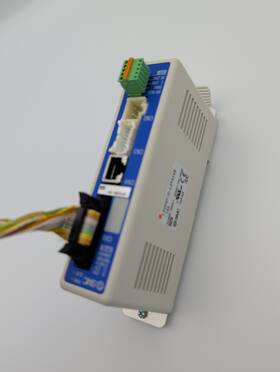
( Brand: Smc ), ( Manufacturer Part Number: LECP6P1D-LEFS25B-100 ), ( Part Type: Motor Driver )
Review SMC Step Motor Driver
The **SMC LECP6P1D-LEFS25B-100** is a high-performance, versatile stepper motor driver designed to deliver precise motion control in industrial, automation, and robotics applications. Engineered with SMC s reputation for reliability and engineering excellence, this driver combines robust construction with advanced digital control to ensure seamless integration into demanding motion control systems. Built around a **100-watt (25V, 4A per phase)** power rating, the LECP6P1D-LEFS25B-100 is optimized for driving **hybrid stepper motors** with a current rating of up to 4 amps per phase, making it suitable for applications requiring both high torque and smooth, accurate positioning. Its **microstepping capability** supporting up to **1/256th of a full step** enables ultra-fine motion control, reducing vibration and improving overall system performance, particularly in applications such as CNC machining, packaging equipment, medical devices, and automated assembly lines.
The driver features a **compact yet rugged aluminum housing**, providing excellent thermal dissipation and protection against environmental factors, while its **IP65-rated enclosure** ensures durability in harsh industrial settings. Its **PWM-based current control** allows for precise regulation of motor current, minimizing heat generation and extending both the driver s and motor s lifespan. The LECP6P1D-LEFS25B-100 incorporates **SMC s proprietary LECP series architecture**, which integrates **digital signal processing (DSP)** for optimized torque response, reduced cogging, and enhanced dynamic performance. This is complemented by **adjustable acceleration/deceleration profiles**, enabling smooth motion transitions and reducing mechanical stress on connected components.
For seamless system integration, the driver offers a **wide range of communication interfaces**, including **Pulse/Direction (P/D), SSI (Synchronous Serial Interface), and Ethernet (via optional module)** for compatibility with PLCs, CNC controllers, and other motion control systems. Its **user-friendly configuration** is achieved through a **front-panel keypad and LCD display**, allowing for on-the-fly adjustments of parameters such as microstepping resolution, current limit, and homing settings. Additionally, the driver supports **remote diagnostics and monitoring** via digital outputs and communication protocols, facilitating predictive maintenance and reducing downtime. Safety is also a priority, with built-in **overcurrent, overtemperature, and short-circuit protection** to safeguard both the driver and the connected motor.
Ideal for applications requiring **high precision, reliability, and efficiency**, the SMC LECP6P1D-LEFS25B-100 stands out as a versatile solution for motion control engineers seeking a balance between performance and ease of use. Whether deployed in **automated manufacturing, laboratory equipment, or precision positioning systems**, this driver delivers consistent, repeatable motion with minimal maintenance, making it a dependable choice for industries where accuracy and durability are paramount.
### **Pros and Cons of buying a SMC LECP6P1D-LEFS25B-100 Stepper Motor Driver**
#### **Pros**
1. **High Power and Torque Handling** The driver is designed for industrial applications, capable of handling stepper motors with high torque requirements (up to 250W continuous, 500W peak). This makes it suitable for heavy-duty automation, CNC machines, and precision positioning systems.
2. **Microstepping Capability** Supports up to 1/256 microstepping, which significantly improves smoothness, resolution, and vibration reduction in motion control applications. This is beneficial for applications requiring fine positioning, such as 3D printers, robotics, or medical equipment.
3. **Built-in Overcurrent and Overheat Protection** The driver includes thermal protection and current limiting to prevent motor damage from overheating or excessive load. This enhances reliability and extends the lifespan of both the driver and motor.
4. **Wide Voltage and Current Range** Compatible with a broad range of stepper motors (2-phase, 250W max) and supports current settings from 0.5A to 2.5A, allowing flexibility in selecting motors for different applications.
5. **Compact and Industrial-Grade Design** The driver is housed in a robust, DIN-rail-mountable enclosure, making it suitable for cleanroom or harsh industrial environments. Its compact size allows for efficient space utilization in control panels.
6. **RS-232/RS-485 Communication Interface** Supports serial communication (via optional modules), enabling integration with PLCs, CNC controllers, or custom firmware for advanced motion control and remote monitoring.
7. **Low Noise and Vibration** Microstepping reduces mechanical noise and vibration, which is critical for applications requiring high precision, such as semiconductor manufacturing or optical alignment systems.
8. **Easy Integration with SMC s Ecosystem** Compatible with other SMC components (e.g., power supplies, encoders, and motion controllers), simplifying system design and maintenance for users already working with SMC products.
9. **Long-Term Availability** As an established industrial product, it is less likely to become obsolete compared to newer, less-proven alternatives.
10. **Support for Bipolar and Unipolar Motors** Versatile enough to work with both bipolar and unipolar stepper motors, increasing compatibility with existing setups.
---
#### **Cons**
1. **Higher Upfront Cost** Compared to consumer-grade or generic stepper drivers, this industrial-grade driver is more expensive, which may be a barrier for small-scale or hobbyist projects.
2. **Complex Setup and Configuration** Requires familiarity with microstepping settings, current tuning, and communication protocols (if using serial interfaces). Beginners may need additional documentation or support to configure it correctly.
3. **Limited Built-in Diagnostics** While it has protection features, troubleshooting issues (e.g., motor stalling, driver overheating) may require external tools or oscilloscopes, adding complexity for non-experts.
4. **No Built-in Encoder Feedback (Standard Model)** The base model does not include encoder support; users needing closed-loop control would need to add an external encoder module (e.g., SMC s LECP6P1D-LEFS25B-100 with encoder option), increasing cost.
5. **Dependence on SMC s Support** If issues arise, users may need to rely on SMC s technical support, which could involve longer response times compared to open-source or community-supported alternatives.
6. **Potential for Obsolescence** While less likely than consumer electronics, industrial products can become outdated as newer, more efficient drivers (e.g., with higher microstepping or better energy savings) are introduced.
7. **No Built-in Brake or Regenerative Braking** Unlike some high-end drivers, this model does not include regenerative braking, which could lead to energy waste in frequent stop-and-go applications.
8. **Limited Software Integration** While it supports serial communication, it may not have native compatibility with popular motion control software (e.g., GRBL, Mach3) without additional configuration or adapters.
9. **Physical Size Constraints** The DIN-rail mount is convenient but may not fit in space-constrained applications where smaller, panel-mount drivers are preferred.
10. **Learning Curve for Advanced Features** Features like serial communication, multi-axis synchronization, or advanced motion profiles require deeper knowledge of motion control systems, which may not be necessary for simple applications.
---
### **Conclusion**
The **SMC LECP6P1D-LEFS25B-100** is a **high-quality, industrial-grade stepper motor driver** ideal for **precision automation, CNC machines, robotics, and heavy-duty applications** where reliability, torque, and microstepping resolution are critical. Its robust protection features, wide compatibility, and integration capabilities make it a strong choice for **professional and industrial users**.
However, it is **not the best fit for hobbyists, small-scale projects, or budget-conscious buyers** due to its **higher cost, complexity, and lack of beginner-friendly features**. For such applications, alternatives like **generic drivers (e.g., DM542), open-source solutions (e.g., TMC2209), or lower-cost industrial drivers** may be more suitable.
If your project demands **high performance, durability, and industrial standards**, this driver is a **solid recommendation**. Otherwise, weigh the trade-offs against simpler or more affordable options.
---
### **Final Recommendation**
- **Buy it if:**- You need a **reliable, high-torque driver** for **industrial automation, CNC, or robotics**.
- Your application requires **microstepping (up to 1/256)** and **low vibration**.
- You are working within **SMC s ecosystem** or need **serial communication** for integration.
- Budget constraints are not a major concern, and you prioritize **long-term support and durability**.
- **Avoid it if:**- You are a **hobbyist or student** working on a **low-budget project**.
- Your application does not require **high precision** or **heavy loads**.
- You prefer **simpler, open-source, or more user-friendly drivers**.
- Space or cost constraints make **alternative drivers** (e.g., DM542, TMC drivers) more appealing.
For most **professional and industrial users**, this driver is a **worthy investment**. For others, exploring **mid-range or hobbyist alternatives** may offer a better balance of performance and cost.
Details:
part #: lecp6p1dlefs25b100 price
- $200.00
specifications linactuat:
- brand: Smc
- mpn: Lecp6p1d-lefs25b-100
- part type: Motor Driver
returns linactuat:
- time: 30 Days
- method: Money back
- paid by: Buyer
- policy: Returns Accepted
general linactuat:
- Industrial Automation Motion Controls > Rotary Linear Motion > Rotary Actuators
- condition: Used
seller linactuat:
- # reviews: 442
- rating: 100.0%
- city: Medford, Minnesota
payments linactuat:
- credit card: Discover
- wallet: Paypal
- other
offer linactuat:
- quantity: 1
- availability: In Stock
- sold: 0
- started: May 20, 2026
- options: Ship-to-home
shipping linactuat:
- class: Standard, Expedited
- type: Fixed
- carrier: USPS, FedEx
- cost: $0.00
- service: USPS Ground Advantage, USPS Priority Mail, FedEx 2Day
- transit: 3-8 Days
Smc LECP6P1D-LEFS25B-100 Is Similar To:
- Msmd012p1u L-lxshssa-150sa4100b Panasonic Smc Actuator Servo Motor (25.9% similar) 00LOT of 500 250LDB, 022806, MSD28774, 21AA13C PCB boards T75498 1,000. 00FLUKE trend b serialize T13172 1,000. 001636539 a 05869ASSY T13139 1,000. Automotive medical truck parts networking communications electric motors breakers power step featured items lot of 2000 Tao-saw technology test ...(May 5th, 2018)
- Smc Lecp1p1d-leps6k-25 Electric Actuator Motor Driver Pnp Controller (58.2% similar) The speed and acceleration of the positioning can be set by switch for each operating direction. Retail price: $220.00. Smc LECP1P1D-LEPS6K-25 electric actuator motor driver NP controller, comes with what you see in the pictures. Input: 24 volts dc /- 10%. Model number: LECP1P1D-LEPS6K-25. Made in...(December 10th, 2024)
- Smc Lxfh5sb-100 Electric Linear Actuator Stepper Motor (46.9% similar) See photos for details...(January 11th, 2025)
- Smc E-my2h16-600tap Electric Actuator And Ts3643n9 Step Motor Encoder Used (39% similar) Ups next day am. Item is sold as pictured. The cost of combined shipping depends on weight, location buyer and size box. Prices for these options may differ from standard ground shipping. These services include: ups 3 day select. Smc E-MY2H16-600TAP electric actuator TS3643N9 step motor encoder. Ups...(March 17th, 2025)
- Smc Lefs40a-300 Step Motor Ball Screw Linear Actuator Positioner 300mm (48.2% similar) Great working condition. Stroke length : 300MM. Speed rating: 20 to 500MM /s. Specifications: model #: LEFS40A-300-S3. Comes as shown. Electric actuator. I'll get back to you asap. Smc LEFS40A-300-S3 electric step motor ball screw linear actuator slider, 300MM...(April 15th, 2025)
- Smc 2151102 Lecsa63t-100-t Linear Motor Stage Usip (47.8% similar) The product must be the original item shipped, with matching serial numbers if applicable. Manufacturer part number: 2151102. A previously used, fully functional product that may have some signs of cosmetic wear. Most items are in stock when they listed. 2-YEAR MRI shield protection plan included. ...(December 23rd, 2025)