THOMSON Lead Screw Linear Positioner Servo Motor MS33LGBL400
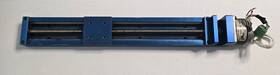
( Brand: Thomson ), ( Manufacturer Part Number: LGBL400 ), ( Part Type: Servo Screw Linear Motor ), ( Country Of Origin: United States )
Review THOMSON Lead Screw Linear Stage Positioner Servo Motor
The **Thomson LGBl400 MS33LGBl400 Lead Screw Linear Positioner with Servo Motor** is a high-performance, precision-engineered linear actuator designed for demanding industrial applications requiring exceptional accuracy, reliability, and repeatability. Part of Thomson s renowned **LGBl400 series**, this linear positioner combines a robust **acme lead screw mechanism** with a **servo motor drive system**, delivering smooth, controlled motion across extended travel ranges while maintaining minimal backlash and superior load-handling capabilities. The **MS33 variant** features a **400 mm (15.75 in) travel length**, making it ideal for applications in automation, material handling, medical equipment, semiconductor manufacturing, and CNC machining where precise positioning is critical. Engineered with **stainless steel or hardened steel components**, the lead screw ensures durability against wear, corrosion, and environmental contaminants, while the **ball-bearing-supported guide rails** provide stable, vibration-dampened movement along the full stroke. The integrated **servo motor**, paired with Thomson s proprietary **closed-loop feedback system**, enables real-time position monitoring and correction, eliminating drift and ensuring sub-micron-level accuracy perfect for applications requiring tight tolerances, such as pick-and-place systems, wafer alignment, or automated assembly lines. The positioner s **modular design** allows for easy integration with various control interfaces, including **PLCs, CNC controllers, or motion control software**, while its **compact yet sturdy construction** maximizes workspace efficiency. Whether used in high-speed indexing tasks or delicate, force-sensitive operations, this linear actuator delivers consistent performance under continuous operation, reducing downtime and maintenance costs. With a focus on **precision engineering and industrial-grade robustness**, the Thomson LGBl400 MS33 is a versatile solution for engineers and manufacturers seeking a dependable, high-precision linear motion system.
The **Thomson LGBL400 MS33LG-BL400 lead screw linear positioner** is a high-performance servo-driven linear actuator designed for precision motion control in industrial applications. Below is a detailed breakdown of its pros and cons, followed by a conclusion and recommendation.
---
### **Pros**
1. **High Precision and Accuracy**
The LGBL400 series is known for its sub-micron positioning accuracy, making it ideal for applications requiring tight tolerances, such as semiconductor manufacturing, medical equipment, or CNC machining. Thomson s lead screw design minimizes backlash and ensures repeatable motion.
2. **High Load Capacity**
With a load capacity of up to 400 kg (depending on configuration), this positioner can handle substantial forces, making it suitable for heavy-duty applications like material handling, robotics, or automated assembly lines.
3. **Servo Motor Integration**
The MS33 servo motor provides smooth, responsive motion with high torque density. This allows for precise speed control, acceleration/deceleration profiles, and seamless integration with motion controllers (e.g., Beckhoff, Siemens, or Allen-Bradley). The motor s closed-loop feedback ensures minimal error and high efficiency.
4. **Durability and Reliability**
Thomson actuators are built with robust materials, including hardened lead screws and corrosion-resistant coatings, ensuring long-term performance in harsh environments. The sealed design reduces contamination risks, making it suitable for cleanroom or outdoor applications.
5. **Modular and Customizable Design**
The LGBL400 can be configured with different stroke lengths, mounting options (e.g., flange, base, or panel mount), and end-of-travel options (e.g., mechanical or electronic stops). This flexibility allows for tailored solutions to fit specific application needs.
6. **Low Maintenance Requirements**
Unlike belt-driven systems, lead screws have fewer moving parts prone to wear (e.g., no belts or pulleys). Regular lubrication and occasional inspection are typically sufficient to maintain performance, reducing downtime.
7. **Compatibility with Advanced Motion Control Systems**
The positioner works seamlessly with modern PLCs, CNCs, and motion controllers that support servo feedback (e.g., encoder-based systems). This makes it easy to integrate into automated production lines or research equipment.
8. **Quiet Operation**
Servo-driven lead screws operate with minimal noise compared to pneumatic or hydraulic systems, which is advantageous in environments where acoustic considerations are critical (e.g., laboratories or precision manufacturing).
9. **Energy Efficiency**
Servo motors are inherently energy-efficient, especially when paired with regenerative drives that recover energy during deceleration. This can lead to cost savings in high-cycle applications.
10. **Warranty and Support**
Thomson is a reputable brand with extensive global support, including technical documentation, spare parts, and service networks. Many models come with warranties (e.g., 1 2 years), providing peace of mind for long-term investments.
---
### **Cons**
1. **Higher Initial Cost**
Compared to pneumatic or belt-driven linear actuators, Thomson s servo-driven lead screw positioners are more expensive upfront. The cost reflects the precision engineering, servo motor, and high-quality components. Budget-conscious applications may need to justify the investment based on long-term benefits.
2. **Limited Stroke Length Options**
While the LGBL400 offers a range of stroke lengths (typically up to 1,000 mm), extremely long strokes may require multiple units or alternative designs (e.g., ball screws or rack-and-pinion systems). This could add complexity or cost for large-displacement applications.
3. **Sensitivity to Contamination**
Although sealed, lead screws can be affected by dust, debris, or lubricant contamination over time, which may require additional maintenance in dirty environments. Proper sealing and regular cleaning are essential.
4. **Backlash Considerations**
While Thomson s lead screws are designed to minimize backlash, some residual play may exist, especially in high-precision applications. This can be mitigated with preloading or anti-backlash nuts but adds complexity to the design.
5. **Servo Motor Dependency**
The performance of the positioner relies heavily on the servo motor and its driver. Mismatched motor/drive combinations or poor tuning can lead to issues like resonance, overshooting, or instability. Expert setup is often required.
6. **Weight and Size**
The LGBL400 is a heavy-duty unit, which may limit its use in space-constrained or lightweight applications. The size and weight could also impact installation logistics (e.g., mounting, alignment).
7. **Learning Curve for Integration**
Integrating a servo-driven linear positioner into a custom system may require programming knowledge (e.g., PLC code, motion profiles) or collaboration with motion control experts. This can add time and cost to the implementation phase.
8. **Potential for Lead Screw Wear**
Over time, lead screws can experience wear due to friction, especially in high-cycle applications. While Thomson s screws are durable, replacement parts or maintenance may be needed after extensive use (e.g., millions of cycles).
9. **Limited Off-the-Shelf Customization**
While the LGBL400 is modular, some customizations (e.g., non-standard mounting, unique stroke profiles) may require special orders or engineering modifications, increasing lead times.
10. **Energy Consumption During Idle or Low-Load Operations**
Servo motors may draw power even when stationary or under light loads, which could impact energy efficiency in applications with frequent starts/stops.
---
### **Conclusion**
The **Thomson LGBL400 MS33LG-BL400 lead screw linear positioner** is an excellent choice for applications demanding **high precision, heavy load capacity, and reliable servo-driven motion**. Its strengths lie in its accuracy, durability, and compatibility with advanced control systems, making it ideal for industries like semiconductor manufacturing, robotics, medical equipment, and automated assembly. However, the **higher upfront cost, sensitivity to contamination, and dependency on servo motor tuning** may pose challenges for cost-sensitive or less technical applications.
For users prioritizing **performance, longevity, and integration with motion control systems**, the LGBL400 is a strong investment. Conversely, applications with **tight budgets, extreme stroke requirements, or minimal technical support** may need to evaluate alternatives (e.g., ball screw actuators, belt-driven systems, or pneumatic solutions).
---
### **Recommendation**
**Buy the Thomson LGBL400 MS33LG-BL400 if:**- Your application requires **sub-micron precision** (e.g., semiconductor inspection, medical imaging, or CNC machining).
- You need to handle **heavy loads (up to 400 kg)** with smooth, responsive motion.
- You are integrating with a **servo-driven motion control system** (e.g., Beckhoff, Siemens, or Allen-Bradley) and have the expertise to configure and tune the servo motor.
- Your environment is **relatively clean**, and maintenance can be managed (e.g., periodic lubrication).
- You value **long-term reliability and low maintenance** over short-term cost savings.
**Consider alternatives if:**- Your budget is **strictly limited**, and you can tolerate slightly lower precision or load capacity (e.g., Thomson s lighter-duty LG series or ball screw actuators).
- Your application requires **extremely long strokes** (e.g., >1,000 mm), which may necessitate multiple units or a different actuator type.
- You lack **experience with servo motor tuning** and require a simpler, plug-and-play solution (e.g., pneumatic or stepper-driven actuators).
- Your environment is **highly contaminated** (e.g., dusty or corrosive), which may require additional sealing or alternative designs (e.g., ball screws).
**Final Suggestion:** If you proceed with the LGBL400, work closely with Thomson s technical support or a motion control specialist to:- Select the appropriate **servo motor/drive combination** for your load and speed requirements.
- Optimize **motion profiles** (e.g., acceleration/deceleration) to avoid resonance or overshooting.
- Implement a **maintenance schedule** to monitor lead screw wear and lubrication.
For most high-precision industrial applications, the LGBL400 s advantages far outweigh its drawbacks, making it a **highly recommended choice** for demanding motion control tasks.
Details:
Thomson MS33LGBL400 Lead Screw Linear Stage Positioner With Servo Motor, Please review images for quality and size. From a smoke and pet free home.
part #: lgbl400 prices
- $189.99-$420.00
specifications linactuat:
- brand: Thomson
- mpn: Lgbl400
- part type: Servo Screw Linear Motor
- country of origin: United States
shipping linactuat:
- transit: 4-10 Days
- type: Fixed
- service: FedEx Ground / FedEx Home Delivery
- class: Standard
- cost: $22.99
- carrier: FedEx
returns linactuat:
- time: 30 Days
- method: Money back
- policy: Returns Accepted
- paid by: Buyer
payments linactuat:
- other
- wallet: Google-pay
- credit card: Visa
seller linactuat:
- # reviews: 626
- rating: 100.0%
- city: Rolla, Missouri
general linactuat:
- condition: Used
- Industrial Automation Motion Controls > Rotary Linear Motion > Linear Actuators
offer linactuat:
- options: Ship-to-home
- started: May 4, 2026
- sold: 0
- best offers: True
- availability: In Stock
- quantity: 4
Thomson LGBL400 Is Similar To:
- 1-1-2-l-pd-ctl Thomson Linear Guide Piece Kit Sold Ind (36.1% similar) ...(April 3rd, 2018)
- 1039889 Thomson Actuator Linear Sku 1609-b65 (32.5% similar) ...(December 16th, 2016)
- 122026 Thomson Lot Of Linear Bearing Bushing Nos Unused Pics (36% similar) ...(May 31st, 2018)
- 1256 Thomson 11pc Linear Bearing (36% similar) No warranty beyond that. I do miss things occasionally, and if it is not as have represented it, certainly will what can to make right. It will work when arrives. I have made an honest and fair evaluation of this item, but am only human. 11PC Thomson linear bearing blocks pic: lock 26 s9 model part ...(November 1st, 2017)
- 190-9104ctl24 Thompson Thomson Ball Screw In Dia Steel Ef (35.3% similar) Technical ball screwball screw DOA. 250DIRECTIONRIGHT hand root diameter in. 840 length 24 number of STARTS1MATERIALCARBON steel for use with ball NUTS2LGJ1FOR end BLOCKS2LGL4...(May 14th, 2018)
- 29410 Thomson New Linear Actuator (41.1% similar) New Thomson linear actuator part ALP12-21B5-08PART great price pic DSCN3560-3563...(May 1st, 2017)
- 2ab08arbql18 Thomson Linear Ballscrew Actuator Inches Travel (33.1% similar) Stepper motor mount is included the not. 5 inches high from the mounts to tabletop. To make sure you are getting an accurate quote via the shipping calculator, your zip code is default when calculating cost for this item. 5 inch travel, the table is. This is unused with a few nicks from handling. ...(March 28th, 2018)
- 2ca080kal Thomson Industries Linear Slide Inch Travel (40.9% similar) Inch mounting hole distances. 5 inch base plate with travel Thomson industries 2CA080KAL linear slide this buy-it-now offer is for a...(March 7th, 2019)
- 2ca120mbl Thomson Horizontal Linear Guide Slide (33.3% similar) New old stock Thomson horizontal linear guide slide 2CA120MBL 18HAS certificate of conformance height skid fee added in. I like to sell in a variety of styles, offer style, buy it know and make an offer. Please send you zip code for a quote. I do my best to make it right with the customer. ...(December 26th, 2018)
- 2da-12 Thomson Linear Rail 72 (33.3% similar) I will put in a small wood en box for shipping. Hello I have a used good condition Thomson 2DA-12 rail 72 overall and 60 of travel. 4 grease applied. Rails are slightly pitted but till runs smooth...(October 15th, 2017)
- 2da0800b-sl12 Thomson Linear Motion Vexta Xy Stage (31% similar) Vesta, 5v dc motors. Happy buying. One Thomson linear motion systems X stage, including base unit 2DA0800B-SL12 4 x 7 travel 1 cross 3 high. This was used as a laser positioner shipping in the continental us...(February 26th, 2018)