RCS MAR-100-16 Quarter Turn Electric Actuator MAR100-16
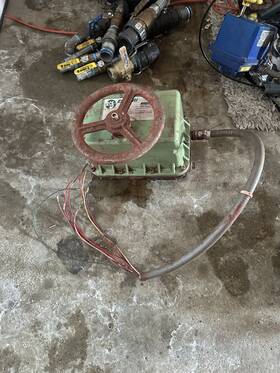
( Brand: Rcs ), ( Manufacturer Part Number: MAR-100-16 ), ( Part Type: Quarter Turn Actuator ), ( Rotation Angle: 90 Degree )
Review RCS Quarter Turn Electric Actuator
The **RCS MAR-100-16 (MAR100-16) Quarter-Turn Electric Actuator** is a high-performance, modular valve control solution engineered for precision, reliability, and seamless integration into industrial automation systems. Designed to meet the rigorous demands of process control applications, this actuator combines advanced electric drive technology with robust mechanical construction to deliver consistent, repeatable quarter-turn actuation for butterfly valves, ball valves, and other quarter-turn devices. With a compact yet sturdy housing and a torque range of up to **1,000 lb-ft (1,360 Nm)**, the MAR-100-16 excels in environments requiring high torque output while maintaining operational efficiency. Its **1500W motor** ensures rapid response times, making it ideal for applications where quick valve positioning is critical, such as in oil and gas, water treatment, chemical processing, and HVAC systems. The actuator features a **smooth, silent operation** thanks to its integrated gear reduction system, which minimizes wear and extends the lifespan of both the actuator and the connected valve.
One of the standout features of the MAR-100-16 is its **modular design**, allowing for easy customization to fit specific valve sizes and operational requirements. The actuator is compatible with a wide range of valve sizes, from **DN40 to DN600 (1.5" to 24")**, and can be configured with various mounting options, including flange, lug, or wafer designs, ensuring versatility across different piping systems. Its **digital positioner interface** enables precise control via standard communication protocols such as **Modbus RTU, Profibus, or Foundation Fieldbus**, making it fully compatible with modern SCADA and PLC systems. Additionally, the actuator incorporates **built-in diagnostics**, including torque monitoring, position feedback, and fault detection, which enhance system reliability and reduce downtime by alerting operators to potential issues before they escalate.
Built to withstand harsh industrial conditions, the MAR-100-16 is constructed from **high-grade stainless steel and corrosion-resistant materials**, ensuring durability in environments exposed to moisture, chemicals, or extreme temperatures. Its **IP66/NEMA 4X** rating provides robust protection against dust, water, and contaminants, making it suitable for both indoor and outdoor installations. The actuator also features a **fail-safe mechanism**, allowing for manual override in case of power failure or electronic malfunctions, ensuring continuous operation even in critical scenarios. With its **low maintenance requirements** and **long operational lifespan**, the MAR-100-16 represents a cost-effective solution for industries prioritizing efficiency, safety, and long-term performance. Whether deployed in a refinery, water treatment plant, or commercial building automation system, this quarter-turn electric actuator delivers the precision and reliability needed to optimize valve control and enhance overall system performance.
### **Pros and Cons of buying a RCS MAR-100-16 (Quarter Turn Electric Actuator)**
#### **Pros:**1. **High Torque and Reliability** The MAR-100-16 is designed for heavy-duty applications, offering a high torque range (up to 1,000 lb-ft) suitable for large valves, dampers, and industrial control systems. Its robust construction ensures long-term durability in demanding environments.
2. **Precision and Control** As a quarter-turn actuator, it provides accurate positioning for butterfly valves, ball valves, and similar devices. The electric drive allows for precise control, making it ideal for automation and remote operation.
3. **Wide Voltage and Power Options** It supports multiple power inputs (e.g., 24V DC, 110V AC, 230V AC), making it versatile for different industrial setups without requiring extensive modifications.
4. **Modular and Customizable** The actuator can be integrated with various control systems (PLC, DCS, or manual override) and is compatible with different valve types. Some models include built-in limit switches, position feedback, and communication interfaces (e.g., Modbus).
5. **Energy Efficiency** Electric actuators are generally more energy-efficient than pneumatic or hydraulic alternatives, reducing long-term operational costs.
6. **Low Maintenance** Compared to hydraulic actuators, electric versions have fewer moving parts exposed to wear, leading to lower maintenance requirements.
7. **Safety Features** Many models include fail-safe mechanisms (e.g., emergency stop, position monitoring) to prevent unintended valve movements, enhancing system safety.
8. **Global Compatibility** RCS (a brand under R. C. S. Controls) is known for producing actuators that meet international standards (e.g., NEMA, IEC), ensuring compatibility with global industrial regulations.
---
#### **Cons:**1. **Higher Upfront Cost** Electric quarter-turn actuators like the MAR-100-16 are typically more expensive than manual or pneumatic alternatives, especially for high-torque models. The initial investment may be a barrier for smaller businesses or budget-conscious projects.
2. **Dependence on Power Supply** Unlike pneumatic actuators (which use compressed air), electric actuators require a stable electrical supply. Power outages or voltage fluctuations can disrupt operation unless backup systems (e.g., UPS) are implemented.
3. **Limited Suitability for Explosive Environments** While some electric actuators are rated for hazardous locations (e.g., ATEX, IECEx), the MAR-100-16 may not be inherently explosion-proof without additional certification or modifications. Pneumatic actuators are often preferred in highly flammable or explosive environments due to their inherent safety.
4. **Potential for Electrical Failures** Electrical components (motors, wiring, controllers) can fail over time due to wear, environmental factors (e.g., moisture, dust), or electrical surges. This requires regular inspections and maintenance to avoid downtime.
5. **Installation Complexity** Electric actuators may require more intricate wiring and integration with control systems compared to pneumatic or manual actuators. This can increase installation time and labor costs, particularly in retrofitting existing systems.
6. **Noise and Vibration** Electric actuators can generate operational noise and vibration, which may be a concern in noise-sensitive applications or when installed in close proximity to sensitive equipment.
7. **Limited Portability** Unlike pneumatic actuators, which can be powered by portable air compressors, electric actuators are tied to fixed power sources, reducing flexibility in field applications.
8. **Potential for Overheating** In continuous or high-load operations, electric actuators may overheat if not properly ventilated or if cooling systems are inadequate. This can lead to reduced lifespan or malfunctions.
---
### **Conclusion**
The **RCS MAR-100-16** is a high-performance quarter-turn electric actuator well-suited for industrial applications requiring precise, automated valve control with high torque. Its reliability, modularity, and energy efficiency make it a strong choice for large-scale systems where electrical power is stable and maintenance is manageable. However, its higher cost, dependence on power, and potential complexity in installation and maintenance may pose challenges for smaller operations or environments with unreliable electricity.
### **Recommendation**
**Buy the RCS MAR-100-16 if:**- You need a robust, high-torque electric actuator for heavy-duty valve control (e.g., in HVAC, water treatment, or industrial process plants).
- Your facility has a reliable electrical supply and can accommodate the actuator s integration with control systems.
- Long-term cost savings (energy efficiency, low maintenance) outweigh the initial investment.
- The application does not require explosion-proof or highly portable solutions.
**Avoid or Consider Alternatives if:**- Budget constraints make the upfront cost prohibitive; explore lower-torque models or manual actuators.
- The environment lacks stable electrical power; pneumatic actuators may be more resilient.
- The application involves hazardous locations without proper certification; opt for explosion-proof pneumatic or hydraulic actuators.
- Simplicity and ease of installation are critical; manual or pneumatic actuators may be preferable.
For most industrial automation needs where reliability and precision are prioritized, the **MAR-100-16 is a solid choice**, provided the operational context aligns with its requirements. Always verify compatibility with your specific valve type, control system, and environmental conditions before purchasing.
Details:
I removed it to make room for new additions my system with more compact parts. Used in working condition.
part #: mar10016 price
- $150.00
specifications linactuat:
- brand: Rcs
- mpn: Mar-100-16
- part type: Quarter Turn Actuator
- rotation angle: 90 Degree
seller linactuat:
- rating: 100.0%
- # reviews: 31
- city: Waukesha, Wisconsin
returns linactuat:
- policy: No Returns
payments linactuat:
- credit card: Visa
- wallet: Google-pay
- other
general linactuat:
- Industrial Automation Motion Controls > Rotary Linear Motion > Rotary Actuators
- condition: Used
shipping linactuat:
- type: Calculated
- transit: 3-10 Days
- service: USPS Priority Mail
- class: Expedited
- carrier: USPS
- cost: $10.85
offer linactuat:
- sold: 0
- best offers: True
- started: February 10, 2026
- availability: In Stock
- quantity: 1
- options: Ship-to-home
Rcs MAR-100-16 Is Similar To:
- Knox90017635-mar50-30-d Rcs Flow Control Actuator Used (29.4% similar) If another carrier such as ups or FedEx is required to ship due the size, then shipping costs may change...(December 24th, 2018)
- Rcs-ra35-i-20-gsi-m-50-s Rcs-c-ra35-i-20-0 Iai Robo Cylinder Linear Ball Screw Actuator System Controller (30% similar) Need this item next day. Messaging: through messages. Our cut-off time for shipping an item is 3:45PM ct. If you do not have an account no worries...(October 22nd, 2018)
- Rcs-ra45-i-30-gn-m-100-m Iai Robocylinder Actuator W (43% similar) AI Rosalind RCS-RA45-I-30-GN-M-100-M ACTUATORRCS-E-RA45-I-30-0 controller various cables included see picture...(June 22nd, 2017)
- Rcs-sa6-i-30-m-450-s Rcs-c-sa6-i-30-0 Iai Robo Cylinder Linear Ball Screw Actuator System Controller (31% similar) If you do not have an account no worries. Address: next day AUTOMATION9472 hemlock lane our cut-off time for shipping an item is 3:45PM ct. Messaging: through messages. Need this item next day...(October 22nd, 2018)
- Linear Rcs-ra45-a-30-gn-m-200-m-b Robo Cylinder Actuator Fast Shipping (32% similar) Linear actuator cylinder. Pulled from running operation...(May 10th, 2024)
- Iai Rcs-sm-i-100-m-900-t1-n E-con Control Intelligent Actuator (47.9% similar) Motor hp: 100W. Are you moving and need to have your machinery prepped, loaded, shipped new location. Industrial demolition. Stroke: 900MM. Industrial parts r us is equipped to handle large machinery moving, crating, shipping, and trucking. Bulk purchasing of surplus equipment and spare parts ...(August 6th, 2024)
- Iai Rcs-sa5-a-20-l-150-r15-bl Robo Cylinder Pneumatic Actuator Slider Lot Of 3 (39.1% similar) Everything pictured is included as shown. They may require service, cleaning or parts / expertise to be function optimally. As these are costly items with industrial robotics applications, please be familiar when buying. Each of these has been used. This lot of three AI robot cylinder pneumatic ...(September 10th, 2024)
- Iai Rcs-rb7535i-150-gd-m-100-s-b Robo Cylinder Linear Actuator With Controller Wafer Fab Robot Elevator z-axis (29.1% similar) Unfortunately I do not have any specs. Likely used, possibly unused with shelf wear. Includes motor and encoder cables. AI robot cylinder linear actuator with controller. This unit was received with various 300MM wafer fab items. Controller has parallel and serial i/o ports. Condition: surplus item...(October 5th, 2024)
- Iai Rcs-sa4-a-20-l-50-n-bl Robo Cylinder Linear Actuator 50mm Stroke 20w 78.4nm (32.8% similar) Shipping dimensions: length 12 in. Condition used. Items in LOT1. Part NUMBERRCS-SA4-A-20-L-50-N-BL. Country of manufacture japan. Model RCS-SA4-A-20-L-50-N-BL. Ask our experts. And the cost of return shipping...(November 12th, 2024)
- Iai America Inc Rcs-sa5-a-20-m-250-s-be Linear Actuator 4398 (26.1% similar) Most items are in stock when they listed. The product must be the original item shipped, with matching serial numbers if applicable. Manufacturer part number: RCS-SA5-A-20-M-250-S-BE. Used - part is missing black top piece. 2-YEAR MRI shield protection plan included. Special instructions...(July 29th, 2025)
- Iai Rcs-sm-i-150-m-100-n Linear Actuator (42.1% similar) Cooling fans. Solenoid valves. Gear reducers. Shock absorbs. Pneumatic exhaust valves. Solenoid coils. Heating and cooling...(October 24th, 2025)