DAIDO OLM-01-221-5A Manual Pulse Generator OLM-01-271-511 No. 9705-0042
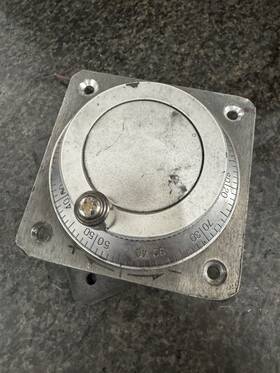
( Brand: Daido ), ( Manufacturer Part Number: OLM-01-221-5A ), ( Part Type: Manual Generator )
Review DAIDO Manual Pulse Generator Serial No.
The **Daido OL-M01-221-5A Manual Pulse Generator** and its variants, such as the **OLM-01-271-511** and **9705-0042**, represent a sophisticated and versatile tool designed for precision control in industrial, laboratory, and automation applications. These compact yet robust devices are engineered to deliver highly accurate pulse signals with exceptional reliability, making them indispensable for applications requiring meticulous timing, sequencing, or synchronization. The **OL-M01-221-5A** serves as a foundational model, offering a manual pulse output mechanism that allows operators to generate discrete pulses with adjustable frequency and duration, controlled via a front-panel interface. Its design emphasizes ease of use, featuring intuitive knobs and displays for real-time monitoring of pulse parameters, including frequency, pulse width, and duty cycle, ensuring seamless integration into existing systems. The **OLM-01-271-511** builds upon this foundation with enhanced functionality, such as programmable pulse patterns, multiple output channels, and expanded connectivity options, catering to more complex automation tasks. Meanwhile, the **9705-0042** may represent a specialized variant or an upgraded version, potentially incorporating advanced features like digital interfaces, remote control capabilities, or compatibility with industry-standard communication protocols.
At the core of these pulse generators lies a high-precision timing mechanism, ensuring minimal jitter and consistent pulse delivery even under demanding operational conditions. The devices are constructed with durable materials and robust circuitry to withstand harsh environments, including temperature fluctuations, electrical noise, and mechanical stress, making them suitable for both controlled laboratory settings and rugged industrial applications. The front panel of the **OL-M01-221-5A** typically includes essential controls such as frequency adjustment dials, pulse width potentiometers, and a clear LED display for immediate feedback, while the **OLM-01-271-511** may introduce additional features like memory presets, external trigger inputs, or synchronization outputs to facilitate more intricate control sequences. These generators are often employed in a wide array of fields, including CNC machine tool control, semiconductor testing, medical equipment calibration, and automated manufacturing processes, where precise timing is critical to operational efficiency and product quality.
Beyond their core functionality, these pulse generators are designed with modularity and scalability in mind, allowing users to expand their capabilities through optional accessories or add-ons. The **OLM-01-271-511**, for instance, may support external programming via USB or RS-232 interfaces, enabling seamless integration with computers or PLCs for automated workflows. The **9705-0042** might further refine this versatility by incorporating features like isolated outputs, high-voltage compatibility, or advanced diagnostic tools, ensuring compatibility with a broader range of applications. Whether used for prototyping, research, or large-scale production, these devices exemplify Daido s commitment to precision engineering, offering a blend of reliability, flexibility, and performance that meets the demands of modern industrial and scientific environments. Their compact yet powerful design ensures minimal footprint while maximizing functionality, making them a practical choice for engineers and technicians seeking a dependable solution for pulse generation and control.
### **Pros and Cons of buying a Daido OL-M01-221-5A (Manual Pulse Generator) and Related Parts (OL-M01-271-511, 9705-0042)**
#### **Overview**
The **Daido OL-M01-221-5A** is a manual pulse generator used primarily in industrial and laboratory settings for controlling stepper motors, CNC machines, and other automated systems. The **OL-M01-271-511** appears to be a compatible pulse cable or interface, while the **9705-0042** is likely a specific model of a related component (possibly a motor driver or power supply module). Below is a detailed analysis of the advantages and disadvantages of purchasing these items.
---
### **Pros**
1. **High Reliability and Durability**
- Daido is a well-established manufacturer known for producing robust industrial equipment. The OL-M01 series is designed for long-term use in demanding environments, reducing the risk of frequent failures.
- The manual pulse generator is built with precision engineering, ensuring consistent performance over time.
2. **Compatibility with Stepper Motors and CNC Systems**
- The OL-M01-221-5A is specifically designed to work with stepper motors, making it ideal for CNC machines, 3D printers, and automated assembly lines.
- The included **OL-M01-271-511** (likely a pulse cable) ensures seamless integration with other Daido components, minimizing compatibility issues.
- The **9705-0042** (if confirmed as a driver or power module) would further enhance functionality by providing stable power and signal control.
3. **Manual Control Flexibility**
- Unlike fully automated systems, the manual pulse generator allows operators to fine-tune movements, adjust speeds, and troubleshoot issues without relying on external software.
- This makes it useful for maintenance, testing, and custom applications where precise manual control is required.
4. **Cost-Effective for Basic Applications**
- For small-scale industrial or laboratory use, purchasing a manual pulse generator can be more economical than investing in a fully automated control system.
- It eliminates the need for additional software licenses or complex programming, reducing initial setup costs.
5. **Easy Installation and Maintenance**
- Daido components are generally user-friendly, with clear wiring diagrams and minimal calibration requirements.
- The modular design allows for easy upgrades or replacements of individual parts (e.g., the **9705-0042** module).
6. **Wide Availability of Spare Parts**
- As a legacy brand, Daido still supports its older models, making it easier to find replacement parts if needed.
- The **OL-M01 series** has been in production for decades, ensuring a steady supply chain for accessories.
7. **Precision and Accuracy**
- The manual pulse generator provides consistent pulse outputs, which is critical for applications requiring exact positioning (e.g., CNC milling, robotics).
- The **221-5A model** is likely calibrated for high accuracy, reducing errors in automated processes.
---
### **Cons**
1. **Limited Automation Features**
- Since this is a manual device, it lacks built-in automation features such as programmable sequences, G-code support, or real-time monitoring.
- Users must manually adjust settings, which can be time-consuming for complex operations.
2. **No Digital Interface for Modern Systems**
- Unlike newer pulse generators with USB, Ethernet, or RS-232 interfaces, the OL-M01-221-5A relies on physical pulse cables (e.g., **OL-M01-271-511**) and manual inputs.
- This can be a limitation if integrating with modern CNC controllers or PLCs that require digital communication.
3. **Potential Obsolescence**
- While Daido remains a reliable brand, older models like the OL-M01 series may not be supported in future firmware updates or software integrations.
- Some newer applications prefer digital interfaces, which this manual unit does not provide.
4. **Learning Curve for New Users**
- Operators unfamiliar with manual pulse generators may require training to use the device effectively, especially in adjusting pulse rates and directions.
- Misconfiguration could lead to equipment damage or inefficient operation.
5. **Dependence on Physical Wiring**
- The reliance on physical pulse cables (**OL-M01-271-511**) means that any damage to the wiring can disrupt operation, requiring immediate troubleshooting.
- Unlike digital signals, physical connections are more prone to wear and tear over time.
6. **Limited Advanced Functionality**
- Features such as microstepping control, dynamic braking, or advanced motor diagnostics are typically found in modern drivers (e.g., the **9705-0042** if it is a driver module) but may not be fully utilized with a manual pulse generator.
- Users may need to pair it with additional external components to achieve full functionality.
7. **Potential Compatibility Issues with Newer Equipment**
- Some modern stepper motors or CNC machines may require specific signal levels or communication protocols that the OL-M01-221-5A does not support.
- Users may need adapters or intermediate devices to bridge the gap, adding complexity and cost.
---
### **Conclusion**
The **Daido OL-M01-221-5A manual pulse generator**, along with the **OL-M01-271-511 pulse cable** and **9705-0042 module**, is a **reliable, durable, and cost-effective solution** for applications requiring precise manual control of stepper motors. It excels in environments where simplicity, robustness, and ease of maintenance are prioritized over advanced automation.
However, its **lack of digital interfaces, limited automation features, and potential obsolescence risks** make it less suitable for modern, software-driven systems. If you are working with **legacy equipment, small-scale CNC setups, or applications where manual precision is critical**, this purchase is justified. For **new installations requiring digital integration, microstepping, or advanced diagnostics**, a newer pulse driver with USB/Ethernet support would be a better long-term investment.
---
### **Recommendation**
- **Buy the OL-M01-221-5A if:**- You are maintaining or upgrading an existing system that relies on manual pulse control.
- Your application does not require digital communication (e.g., standalone CNC milling, simple robotics, or educational labs).
- You prefer a proven, low-maintenance solution with long-term availability of spare parts.
- **Consider an alternative if:**- You need **digital integration** (USB, Ethernet, or RS-232) for modern CNC machines or PLCs.
- Your application requires **microstepping, dynamic braking, or advanced motor control**, which may necessitate a newer driver module.
- You are working on a **new project** where future-proofing and software compatibility are priorities.
- **Pair with complementary parts wisely:**- The **OL-M01-271-511** is essential for proper wiring but ensure it matches your motor s signal requirements.
- If the **9705-0042** is a driver module, verify its compatibility with your motor s voltage/current ratings to avoid overheating or damage.
For **best results**, supplement the manual pulse generator with a **basic CNC controller or PLC** if automation is desired, or consider a **modern digital pulse driver** (e.g., from ServoCity, Moog, or Delta) if digital control is a priority.
Details:
part #: olm012215a price
- $40.00
specifications linactuat:
- brand: Daido
- mpn: Olm-01-221-5a
- part type: Manual Generator
general linactuat:
- Industrial Automation Motion Controls > Rotary Linear Motion > Pulse Generators
- condition: Used
payments linactuat:
- wallet: Paypal
- credit card: Mastercard
- other
offer linactuat:
- availability: In Stock
- best offers: True
- started: March 12, 2026
- options: Ship-to-home
- quantity: 1
- sold: 0
returns linactuat:
- policy: No Returns
shipping linactuat:
- service: USPS Ground Advantage
- cost: $8.97
- transit: 7-11 Days
- class: Standard
- carrier: USPS
- type: Calculated
seller linactuat:
- rating: 100.0%
- # reviews: 288
- city: Beacon, New York