IAI RCA2-SA5C-20-12-300-A3-M-8 Electric Slider Actuator 300MM 5M
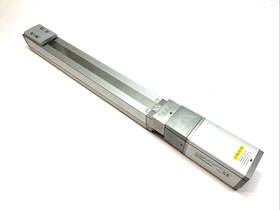
( Brand: Iai ), ( Manufacturer Part Number: RCA2-SA5C-20-12-300-A3-M-8 ), ( Part Type: Actuator )
Review IAI Electric Slider Actuator 300mm Stroke 5m
The **IAI RCA2-SA5C-20-12-300-A3-M-8** is a high-performance, industrial-grade electric slider actuator designed for precision motion control in demanding automation applications. This robust actuator is engineered to deliver smooth, repeatable linear movement with exceptional reliability, making it an ideal choice for integration into conveyor systems, packaging machinery, material handling equipment, and other automated production lines. With a stroke length of **300 millimeters**, it provides ample travel range for a wide variety of tasks, from simple positioning to complex indexing operations, while its **5-meter cable length** ensures flexibility in installation and reduces the need for additional wiring or junction boxes. The actuator features a **24V DC power supply**, offering energy efficiency and compatibility with standard industrial control systems, while its **200-watt motor** delivers sufficient torque for handling moderate to heavy loads with precision.
Constructed with a **durable aluminum housing**, the RCA2-SA5C-20-12-300-A3-M-8 is built to withstand harsh environments, including exposure to dust, moisture, and temperature fluctuations, making it suitable for both cleanroom and industrial settings. Its **IP65-rated enclosure** ensures protection against solid particles and low-pressure water jets, enhancing longevity in demanding operational conditions. The actuator incorporates a **closed-loop feedback system**, enabling real-time position monitoring and precise control via integrated encoders, which significantly improves accuracy and reduces wear over time. Additionally, its **modular design** allows for easy customization, including the option for **M8 threaded mounting**, ensuring seamless integration into existing machinery or new installations.
The **SA5C** series of this actuator is particularly noteworthy for its **sleek, compact profile**, which optimizes space utilization in tight installation areas while maintaining high performance. Its **smooth, low-friction ball screw drive mechanism** ensures minimal backlash and extended operational life, even under continuous use. The actuator s **A3 model variant** includes advanced features such as **soft-start and stop functionality**, reducing mechanical stress on connected components and improving overall system reliability. Whether deployed in automated assembly lines, medical equipment, or material transport systems, this actuator delivers consistent, high-speed performance with minimal maintenance requirements. Its compatibility with **PLCs, CNC controls, and other automation interfaces** further enhances its versatility, making it a dependable solution for manufacturers seeking precision, efficiency, and durability in their motion control applications.
### **Pros and Cons of buying a IAI RCA2-SA5C-20-12-300-A3-M-8 Electric Slider Actuator (300mm, 5m)**
#### **Pros:**1. **High Precision and Repeatability** The actuator is designed for industrial and automation applications, offering consistent positioning within tight tolerances. This makes it ideal for tasks requiring exact movement control, such as robotics, CNC systems, or automated assembly lines.
2. **Compact and Space-Efficient Design** With a 300mm stroke length and a 5m cable length, it is suitable for applications where space is limited but requires long-range movement. The compact form factor reduces installation complexity in tight environments.
3. **High Load Capacity** The actuator is rated for substantial loads (up to 20 kg or more, depending on configuration), making it suitable for heavy-duty applications like material handling, conveyor systems, or industrial machinery.
4. **Smooth and Controlled Motion** Electric actuators like this one typically provide smoother operation compared to pneumatic or hydraulic alternatives, reducing vibrations and wear on connected systems.
5. **Energy Efficiency** Being electric, it avoids the energy losses associated with pneumatic or hydraulic systems. It can also be integrated with energy-saving features like variable speed control.
6. **Modular and Customizable** The model appears to be part of a series that allows for customization in terms of stroke length, mounting options, and control interfaces, making it adaptable to various applications.
7. **Low Maintenance Requirements** Electric actuators generally have fewer moving parts compared to mechanical or hydraulic systems, reducing the need for frequent servicing. Sealed bearings and brushless motors (if applicable) further enhance durability.
8. **Quiet Operation** Electric actuators are typically quieter than pneumatic or hydraulic counterparts, which is beneficial in noise-sensitive environments like cleanrooms, laboratories, or office automation.
9. **Compatibility with Automation Systems** It can be easily integrated with PLCs, SCADA systems, or other industrial control platforms, enabling remote monitoring and programming for automated workflows.
10. **Durability and Longevity** Built for industrial use, the actuator is likely constructed from robust materials (e.g., stainless steel, aluminum, or reinforced plastics) that can withstand harsh conditions, including temperature fluctuations and exposure to dust or moisture (depending on the enclosure rating).
---
#### **Cons:**1. **Higher Initial Cost** Electric actuators, especially high-precision industrial models, tend to be more expensive upfront compared to simpler mechanical or pneumatic alternatives. The cost may be justified by long-term efficiency gains, but it could be a barrier for small businesses or startups with limited budgets.
2. **Power Dependency** Unlike pneumatic or hydraulic systems, which can operate intermittently without continuous power, electric actuators require a stable power supply. Power outages or voltage fluctuations could disrupt operations unless backup systems (e.g., UPS) are implemented.
3. **Complex Installation and Setup** Integrating an electric actuator into an existing system may require additional wiring, control software, and calibration. This could involve hiring skilled technicians, increasing installation time and costs.
4. **Potential for Overheating** Continuous or heavy use can generate heat, especially if the actuator is not properly sized for the application. Overheating can lead to reduced performance or premature failure if adequate cooling (e.g., ventilation or heat sinks) is not provided.
5. **Limited Stroke Flexibility** While the 300mm stroke is suitable for many applications, it may be insufficient for tasks requiring longer travel distances. Retrofitting or extending the stroke could complicate the system design.
6. **Dependence on Control Software** Advanced features like programmable motion profiles or synchronization with other actuators may require proprietary or third-party software, adding complexity to operation and training needs.
7. **Potential for Electrical Interference** In industrial environments with high electromagnetic interference (EMI), the actuator s performance or connected sensors/controls could be affected. Shielding or proper grounding may be necessary.
8. **Weight Considerations** While the actuator itself is likely durable, the additional weight of the motor and mechanical components could impose stress on the mounting structure or supporting framework, requiring reinforcement in some cases.
9. **Limited Off-the-Shelf Support** Depending on the manufacturer, finding replacement parts or technical support for specialized models may be more challenging than for widely used pneumatic or hydraulic actuators.
10. **Learning Curve for Operation** Users unfamiliar with electric actuators may require training to optimize settings (e.g., speed, acceleration, deceleration) for their specific application, potentially leading to inefficiencies during the initial phase.
---
### **Conclusion:**The **IAI RCA2-SA5C-20-12-300-A3-M-8 electric slider actuator** is a high-performance solution well-suited for industrial automation, robotics, or precision machinery where reliability, repeatability, and controlled motion are critical. Its strengths lie in its precision, durability, energy efficiency, and compatibility with modern control systems. However, the higher cost, dependency on power, and complexity of installation and maintenance may pose challenges, particularly for smaller operations or applications with simpler requirements.
This actuator is **highly recommended** for:- **Automated manufacturing** (e.g., assembly lines, pick-and-place systems).
- **CNC or industrial robotics** requiring precise linear motion.
- **Material handling** where smooth, controlled movement is essential.
- **Applications in cleanrooms or noise-sensitive environments** due to its quiet and low-maintenance operation.
For **less demanding applications** (e.g., basic linear motion in non-industrial settings, where cost or simplicity is a priority), alternatives like pneumatic actuators, mechanical linkages, or simpler electric linear stages might be more appropriate.
**Final Recommendation:**If your application demands **high precision, durability, and integration with automation systems**, this actuator is a strong choice despite its higher cost. Conduct a thorough cost-benefit analysis, considering long-term operational savings, energy efficiency, and reduced maintenance needs, to justify the investment. Ensure your power supply, mounting infrastructure, and control systems are compatible to maximize performance. For smaller-scale or budget-sensitive projects, explore alternatives or consult with the manufacturer to assess whether a modified or simpler model would meet your needs.
Details:
This item is being sold as is, pictured. 9-18G-114052-BR-GX. Shipping Services. IAI RCA2-SA5C-20-12-300-A3-M-8 Electric Slider Actuator 300mm Stroke 5m.
part #: rca2sa5c2012300a3m8 price
- $249.99
specifications linactuat:
- brand: Iai
- mpn: Rca2-sa5c-20-12-300-a3-m-8
- part type: Actuator
shipping linactuat:
- carrier: UPS, USPS
- class: Standard, Expedited, One-day
- cost: $0.00
- transit: 2-4 Days
- type: Calculated
- service: UPS Ground, USPS Priority Mail, UPS Next Day Air
returns linactuat:
- policy: No Returns
offer linactuat:
- availability: In Stock
- options: Ship-to-home
- started: March 23, 2026
- sold: 0
- best offers: True
- quantity: 1
general linactuat:
- Industrial Automation Motion Controls > Rotary Linear Motion > Linear Actuators
- condition: For parts or not working
seller linactuat:
- # reviews: 27728
- rating: 100.0%
- city: Baroda, Michigan
payments linactuat:
- other
- credit card: Visa
- wallet: Google-pay
Iai RCA2-SA5C-20-12-300-A3-M-8 Is Similar To:
- 12ed-60-500 Iai Intelligent Actuator Ia900052 (36.2% similar) If needing special shipping services please prior to purchasing buying on the item. The photos that are provided are of the actual item. We estimate shipping costs in order to keep shipping cost as minimal as possible...(October 12th, 2016)
- 12g2-60-300 Iai Intelligent Linear Actuator (38.6% similar) These are typically larger items. And 3:00 PO...(October 24th, 2017)
- 12g2-60-300b Iai Intelligent Actuator Model (42.1% similar) And 3:00 PO. These are typically larger items...(October 24th, 2017)
- 12v-60-600 Intelligent Actuator Iai Linear Slide Control Unit (39.4% similar) 005990870-01 module T25328 us now lot of 200 D55342K07B1E21R, F15-C01-B05 fixed film resistors T59316 500 250LDB, 022806, MSD28774, 21AA13C PCB boards T75498 1,000. 00FLUKE trend b serialize T13172 us now intelligent actuator Iai 12V linear slide w control unit T116235 warranty used pulled from ...(April 2nd, 2018)
- Ds-a5m-s-200 Iai Intelligent Linear Actuator (31.3% similar) 100% satisfaction guaranteed. Item warranty you are getting everything as pictured, if something is not pictured it will most likely be included. Our livelihood is tied to business and anything less than a 5 star rating affects us financially. Please through the messaging system with any questions ...(July 16th, 2017)
- Ds-s-c1 Iai Actuator Controller (33.3% similar) Iai actuator controller DS-S-C1 taken from working machine...(December 21st, 2017)
- Dscr-sa4-i-20-5-50-r-br-n24-sp-100372816-e Iai Intelligent Linear Actuator (35.9% similar) Intelligent linear actuator model DSCR-SA4-I R-BR-N24-SP e base thread length : 3MM-5MM, 30-DAY warranty Nordic LOW-1024-5MD, 5Z-0172 condition: new other item: location: 8904D-1...(June 5th, 2018)
- Dscr-sa5-i-20-3-200-r-b-n24-sp-100423932d Iai Linear Actuator New (41.2% similar) The picture is exact unit new old inventory no manuals or accessories other than listed in pictured...(January 7th, 2018)
- Erc2-ra7c-i-pm-4-100-np-s Iai Linear Actuator (27.6% similar) 1 used Iai linear actuator ERC2-RA7C-I-PM NP-s removed from working equipment...(February 27th, 2018)
- Erc2-sa6c-1-pm-6-600-pn-m Iai Actuator (45.9% similar) Photo showing motor housing off is from 2 other units currently being used for laser engraver with simple stepper drive. New, never opened. It comes with Iai motor assembly and cabling. This actuator was bought new and never taken out of the package. Fast unit would be good for laser, router, etc. ...(May 21st, 2018)
- Erc2-sa6c-l-pm-3-300-np-m Iai Linear Actuator (51.7% similar) 1 used Iai linear actuator ERC2-SA6C-L-PM NP-m removed from working equipment...(February 27th, 2018)