TRIAC CONTROLS TMC2 Modulating Card Vdc 4-20 0-10 1/5 0-135
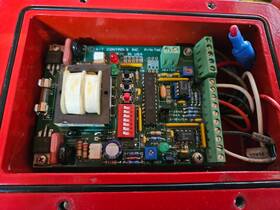
( Brand: Triac Controls ), ( Manufacturer Part Number: TMC2 ), ( Part Type: Card ), ( Voltage: 120 Vac ), ( Country Of Origin: United States )
Review TRIAC CONTROLS Electronic Modulating Card 4-20 Ma 0-10 1-5 Vdc 0-135 Ohms
The **Triac TMC2 Modulating Control Card** is a versatile and high-performance analog control module designed to regulate power delivery to resistive, inductive, and capacitive loads with exceptional precision and efficiency. Engineered for industrial, HVAC, lighting, and automation applications, this card seamlessly integrates into existing control systems to provide smooth, adjustable power modulation via standard analog voltage signals. Its core functionality revolves around a robust triac-based switching mechanism, which allows for continuous, non-linear modulation of output power between **0% and 100%** achieved through pulse-width modulation (PWM) techniques that ensure minimal heat dissipation and extended component lifespan. The device accepts a wide range of input control signals, including **4-20mA current loops, 0-10V DC, 1-5V DC, and 0-135V DC analog voltages**, making it compatible with most PLCs, DCS systems, and programmable controllers. This flexibility ensures seamless integration into diverse automation setups, whether for dimming LED or incandescent lighting, controlling heating elements, or adjusting motor speeds in variable-frequency applications.
Built with durability in mind, the TMC2 card features a rugged, high-current triac rated for **up to 135V AC and 2A RMS**, capable of handling both single-phase and low-voltage inductive loads without phase shift issues. Its internal snubber circuits and surge protection safeguard against voltage spikes, transients, and inrush currents, reducing the risk of damage to connected equipment. The card s compact yet robust design allows for easy mounting in control panels, enclosures, or DIN-rail installations, while its isolated input and output terminals enhance safety and reduce electromagnetic interference (EMI). For enhanced monitoring and diagnostics, the module often includes status LEDs, overload protection, and short-circuit detection, providing real-time feedback on operational status. Whether deployed in a small-scale industrial process, a commercial building automation system, or a custom automation project, the **Triac TMC2 Modulating Control Card** delivers reliable, scalable power modulation with minimal latency, making it an indispensable component for engineers and technicians seeking precise analog control solutions.
### **Pros and Cons of Buying a Triac TMC2 Modulating Card (4-20mA, 0-10V, 1-5V DC, 0-135 )**
#### **Pros**
1. **Wide Input Signal Compatibility** Supports multiple control signals (4-20mA, 0-10V, 1-5V DC), making it versatile for integration with different industrial or automation systems. This flexibility reduces the need for additional signal converters.
2. **Modulating Control (0-135 )** Allows precise adjustment of output power, enabling gradual control of heating, lighting, or motor speed rather than just on/off switching. This is useful for applications requiring smooth modulation, such as dimming lights or regulating temperature.
3. **Triac-Based Output** Triacs are robust for AC loads (e.g., heaters, motors, relays) and can handle higher power levels compared to solid-state relays or MOSFET-based solutions. They are also cost-effective for AC applications.
4. **Industrial-Grade Durability** Designed for harsh environments, these cards often feature robust insulation, overcurrent protection, and resistance to voltage spikes, making them suitable for factory or outdoor installations.
5. **Easy Integration with PLCs or Controllers** Compatible with standard industrial communication protocols (e.g., analog signals from PLCs, sensors, or DCS systems), simplifying automation setups.
6. **No Moving Parts** Unlike mechanical relays, triac-based modules have no wear-and-tear components, increasing longevity and reliability.
7. **Cost-Effective for AC Applications** Generally cheaper than DC-based solutions (e.g., PWM controllers) when used with AC loads, offering a balance between performance and price.
---
#### **Cons**
1. **Limited to AC Loads** Triac modules cannot control DC loads (e.g., DC motors, LEDs, or electronic devices). If your application requires DC modulation, you would need a different solution (e.g., a MOSFET or IGBT-based driver).
2. **Potential for Radio Interference (RFI)** Triacs can generate electromagnetic noise during switching, which may interfere with sensitive electronics or communication systems. Additional filtering may be required.
3. **Sensitivity to Voltage Spikes** While many triac modules include protection circuits, improper installation or surges can still damage the component. External surge protectors may be necessary in harsh environments.
4. **Thermal Management Required** Overloading or continuous high-power operation can generate heat, requiring adequate cooling (e.g., heat sinks or proper ventilation) to prevent failure.
5. **No Zero-Crossing Adjustment in Basic Models** Some triac modules lack fine-tuned zero-crossing control, which can lead to audible hum or flickering in lighting applications. Higher-end models may offer better phase control.
6. **Compatibility Issues with Certain Loads** Inductive loads (e.g., motors, solenoids) may require additional snubber circuits to prevent voltage spikes, complicating installation.
7. **Limited to Analog Control** Unlike digital or smart modules, this card relies on analog signals (4-20mA, 0-10V), which may not be as precise or easily programmable as digital interfaces (e.g., Modbus, CAN bus).
---
### **Conclusion**
A **Triac TMC2 modulating card** is an excellent choice for applications requiring **precise AC power modulation** (e.g., heating control, motor speed regulation, or dimming) where **analog signal compatibility** is needed. Its **versatility, cost-effectiveness, and robustness** make it ideal for industrial or commercial settings with AC loads. However, it is **not suitable for DC applications** and may require additional components (e.g., snubbers, filters) for optimal performance.
If your system involves **DC loads, high-frequency switching, or digital control**, consider alternatives like **MOSFET-based PWM drivers, IGBT modules, or smart relays**. For AC applications with **analog control needs**, this triac module is a strong, practical solution.
---
### **Recommendation**
**Buy this triac modulating card if:**- You need **analog modulation (0-135 ) for AC loads** (heaters, motors, relays).
- Your system uses **4-20mA, 0-10V, or 1-5V DC signals** for control.
- You operate in an **industrial environment** where durability and cost-efficiency matter.
- You are willing to **add protective components** (snubbers, filters) if needed.
**Avoid this card if:**- Your load is **DC-based** (e.g., LEDs, DC motors, electronic devices).
- You require **high-frequency switching or digital control** (e.g., PWM at kHz rates).
- Your application is **highly sensitive to electromagnetic interference (EMI)** without additional shielding.
- You need **precise digital communication** (e.g., Modbus, Ethernet) rather than analog signals.
For **DC modulation**, explore **PWM-based MOSFET drivers** or **solid-state relays**. For **smart control**, consider **PLC-compatible digital relays** or **smart dimmers**. This triac module remains a **solid, budget-friendly option for traditional AC modulation tasks**.
Details:
Triac TMC2 Electronic Modulating Card, model: TMC2-04/05, Automatic calibration for easy setup - eliminates setting zero and span manually, 10-bit microprocessor controller precise positioning and control, Programming of the is accomplished by combination push buttons and seven-position DIP switch without need a command signal, Input signals can be 4-20mA, 1-5mA, 0-10 VDC, 1-5 VDC,0-135 OHM or signal potentiate, The programmed to fail in-place, clockwise counterclockwise on loss Characterize control Linear, quick opening square root or equal percentage square relationship between the actuator position provided following voltage :120VAC/1PH/50-60HZ, NOTE: Previously used with EMI-300 Electric Actuators.
part #: tmc2 price
- $775.00
specifications linactuat:
- brand: Triac Controls
- mpn: Tmc2
- part type: Card
- voltage: 120 Vac
- country of origin: United States
offer linactuat:
- options: Seller-arranged-local-pickup
- availability: In Stock
- best offers: True
- sold: 0
- started: March 10, 2026
- quantity: 4
returns linactuat:
- policy: No Returns
shipping linactuat:
payments linactuat:
- other
- credit card: Mastercard
- wallet: Paypal
general linactuat:
- Industrial Automation Motion Controls > Rotary Linear Motion > Linear Actuators
- condition: Used
seller linactuat:
- city: Penfield, New York
- rating: 100.0%
- # reviews: 197
Triac Controls TMC2 Is Similar To:
- Fse-440 S500 Triac Controls Spring Return Electric Fail-safe Actuator Model (37.9% similar) I have no way of testing it. Over 100,000,000 served. PDF it is a heavy piece. I'm selling it just as I received it. It came from a electric power company surplus sale. Look my my pics for more details. A Controls. Spring return fail safe electric valve actuators feature corrosion resistant Norma 4 ...(August 19th, 2016)
- Triac S08da200-sa1 Controls Thd Heavy Duty Actuators 150psi (36.5% similar) Comments: good part in condition.: heavy duty actuators 150PSI. Part number: S08DA200-SA1. Call for shipping details. Lift gate upon request. Brand: Triac Controls. Platform: Thad...(November 27th, 2024)
- Triac Controls Hq-0153100000 Xem-1350 Electric Actuator 115 Vac 1 Phase 1350 In-lbs Used (50.6% similar) Triac Controls, XEM-1350, electric actuator, 115 VAC/1 phase, 1350 in-lbs, clean, used, as is, specifics: manufacturer: Controls. Mistakes, however, do happen and items sometimes get damaged during transit. Model series: XEM-1350. Torque: 1350 in-lbs. We greatly appreciate your patronage of our ...(April 25th, 2025)
- Triac Controls Bfs-2640 Rotary Actuator Industrial Automation Model (37.2% similar) Triac Controls BFS-2640 rotary actuator industrial automation model...(May 6th, 2026)