LINAK USB2LIN06 Cable
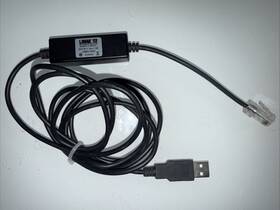
( Brand: Linak ), ( Manufacturer Part Number: USB2LIN06 ), ( Model: LINAK USB2LIN06 ), ( Part Type: Cable ), ( Country Of Origin: Denmark )
Review LINAK Cable
The **Linak USB2LIN06** is a high-performance, industrial-grade serial communication cable designed to seamlessly connect USB-equipped devices to LIN (Local Interconnect Network) bus systems, making it an ideal solution for automotive, robotics, and embedded systems applications where robust, reliable data transmission is critical. Engineered with precision, this cable features a **6-pin male USB Type-A connector** on one end, ensuring compatibility with a wide range of computers, laptops, and development boards, while the other end is equipped with a **6-pin female LIN connector**, allowing direct integration into LIN networks that operate at standard speeds of up to **20 kbps**. Constructed from **high-quality, abrasion-resistant materials**, the cable s outer jacket is built to withstand harsh environmental conditions, including exposure to oil, moisture, and temperature fluctuations ranging from **-40 C to 85 C**, ensuring long-term durability in demanding industrial or automotive settings. The internal wiring is shielded to minimize electromagnetic interference (EMI), guaranteeing stable signal integrity even in electrically noisy environments, while the reinforced strain relief prevents accidental disconnections during repeated flexing or handling. Whether used for diagnostics, firmware updates, or prototyping in automotive ECU (Electronic Control Unit) development, the **USB2LIN06** delivers a dependable bridge between modern USB interfaces and legacy LIN systems, simplifying communication workflows without compromising performance. Its compact yet sturdy design makes it easy to integrate into tight spaces, while its plug-and-play functionality eliminates the need for complex drivers or additional hardware, making it a versatile tool for engineers, technicians, and developers working on next-generation connected systems.
The **Linak USB2LIN06** cable is a specialized interface cable designed to connect a LIN bus (Local Interconnect Network) to a USB port on a computer for diagnostics, testing, or development purposes. Below is a detailed breakdown of its pros and cons, followed by a conclusion and recommendation.
---
### **Pros of the Linak USB2LIN06 Cable**
1. **Compatibility with LIN Networks**
The cable is specifically designed for LIN bus communication, which is commonly used in automotive and industrial applications for low-speed data transfer between microcontrollers and sensors. It supports LIN 1.x and LIN 2.x protocols, making it versatile for various diagnostic tasks.
2. **USB Connectivity**
The USB interface allows seamless integration with modern diagnostic software and tools. Users can connect the cable to a PC running software like **LIN Commander, LIN Trace, or other LIN-compatible diagnostic tools** without needing additional adapters or converters.
3. **Plug-and-Play Functionality**
The cable is typically plug-and-play for most operating systems (Windows, Linux with appropriate drivers). This reduces setup time and technical complexity for users who are not deeply familiar with embedded systems or bus protocols.
4. **Lightweight and Portable**
Compared to some bulkier automotive diagnostic tools, the USB2LIN06 is compact and portable. It can be easily carried in a toolkit or used in field diagnostics without requiring heavy equipment.
5. **Support for Multiple LIN Channels**
The "06" in the model name suggests it may support up to 6 LIN channels (though this depends on the specific variant or software used). This scalability is useful for testing multiple LIN nodes simultaneously.
6. **Driver and Software Support**
Linak provides official drivers and software tools to configure and monitor LIN communication. This ensures compatibility with their own diagnostic tools and may offer better performance and reliability compared to generic USB-to-LIN adapters.
7. **Durability and Build Quality**
Linak is a reputable manufacturer in the automotive diagnostics industry, and their cables are generally built to withstand frequent use in rugged environments, such as workshops or vehicle testing.
8. **Compatibility with LIN Commander**
The cable works well with **LIN Commander**, a popular open-source tool for LIN bus analysis. This makes it accessible to hobbyists and developers who prefer free or low-cost software solutions.
9. **No Additional Hardware Required**
Unlike some solutions that require external power supplies or additional modules, the USB2LIN06 relies solely on the USB connection for power and data transfer, simplifying the setup.
10. **Useful for Prototyping and Development**
Engineers and developers can use this cable to test LIN-based prototypes, debug communication issues, or validate hardware before mass production.
---
### **Cons of the Linak USB2LIN06 Cable**
1. **Limited to LIN Protocol**
The cable is **not universal** it only works with LIN buses. If you need to interface with CAN, FlexRay, or other bus types, you would require separate adapters. This limits its applicability in mixed-network environments.
2. **Dependence on Software**
While the cable itself is straightforward, its functionality relies heavily on compatible software (e.g., LIN Commander, Linak s proprietary tools). Without the right software, the cable may not be fully utilized or may not work at all.
3. **Potential Driver Issues**
Some users report compatibility issues with certain operating systems (e.g., older versions of Windows or Linux). Drivers may need to be manually installed or updated, which can be a hassle for non-technical users.
4. **No Built-in Oscilloscope or Advanced Tools**
Unlike some high-end automotive diagnostic tools, the USB2LIN06 does not include built-in oscilloscopes, signal analyzers, or advanced logging features. For deep signal analysis, additional tools may be required.
5. **Price Relative to Alternatives**
While not excessively expensive, the USB2LIN06 may be more costly than generic USB-to-serial adapters (e.g., FTDI-based cables) if you only need basic LIN communication. However, its specialized nature justifies the cost for LIN-specific applications.
6. **Limited to Low-Speed Communication**
LIN is a low-speed protocol (typically up to 20 kbps), so the cable is not suitable for high-speed data transfer needs. If you require faster communication (e.g., CAN at 1 Mbps), this cable will not suffice.
7. **No Built-in Isolation**
Some LIN applications require electrical isolation between the bus and the diagnostic tool to prevent ground loops or voltage spikes. The USB2LIN06 may not offer isolation, which could be a concern in noisy environments.
8. **Learning Curve for LIN Protocols**
Even with the cable, users must understand LIN protocols (e.g., baud rates, frame formats, and error handling) to effectively diagnose or develop LIN-based systems. This can be a barrier for beginners.
9. **Physical Connectors May Be Specialized**
The LIN connector on the cable may require specific pins or wiring to match the target LIN bus. Incorrect wiring can lead to communication failures or hardware damage.
10. **Limited Community Support Outside Linak s Ecosystem**
While LIN Commander provides open-source support, some users may find that Linak s proprietary tools offer better features or updates. Without official support, troubleshooting may be more difficult outside Linak s ecosystem.
---
### **Conclusion**
The **Linak USB2LIN06 cable** is a **highly specialized and reliable tool** for LIN bus communication, particularly useful for automotive diagnostics, development, and testing. Its strengths lie in its **compatibility with LIN protocols, USB connectivity, and integration with diagnostic software**. It is an excellent choice for professionals or hobbyists working with LIN networks who need a **plug-and-play, portable solution**.
However, its **niche focus on LIN only** and **dependence on software** mean it may not be the best fit for users requiring versatility or advanced features like oscilloscopes. Additionally, users must be prepared to **learn LIN protocols** and potentially troubleshoot software/driver issues.
If your primary need is **LIN bus diagnostics, testing, or development**, the USB2LIN06 is a **strong recommendation**. For broader bus support (e.g., CAN, FlexRay) or advanced signal analysis, you may need to supplement it with other tools.
---
### **Recommendation**
**Buy the Linak USB2LIN06 if:**- You work exclusively or primarily with **LIN bus systems** (e.g., automotive ECUs, industrial sensors).
- You need a **portable, USB-connected solution** for diagnostics or development.
- You are comfortable using **LIN Commander or Linak s software tools**.
- You require **multiple LIN channel support** (depending on the variant).
- You value **reliable, brand-backed hardware** from a trusted manufacturer like Linak.
**Avoid the Linak USB2LIN06 if:**- You need to work with **non-LIN bus protocols** (e.g., CAN, Ethernet, FlexRay).
- You require **high-speed data transfer** beyond LIN s capabilities.
- You are a beginner with **no prior experience** in LIN protocols or diagnostic software.
- You need **built-in signal analysis tools** (e.g., oscilloscopes) that this cable does not provide.
- You are on a **tight budget** and can find a generic USB-to-serial adapter that meets your basic needs.
For most **LIN-focused applications**, the USB2LIN06 is a **solid and practical choice**. Pair it with **LIN Commander** for a cost-effective open-source solution, or use Linak s proprietary tools for enhanced features. If you anticipate expanding beyond LIN in the future, consider investing in a **multi-protocol diagnostic tool** (e.g., CAN LIN) for long-term flexibility.
Details:
LINAK USB2LIN06 Cable. The cable is in good working condition.
part #: usb2lin06 prices
- $15.00-$143.89
specifications linactuat:
- brand: Linak
- mpn: Usb2lin06
- model: Linak Usb2lin06
- part type: Cable
- country of origin: Denmark
shipping linactuat:
- carrier: USPS
- transit: 4-9 Days
- service: USPS Ground Advantage
- type: Fixed
- cost: $4.99
- class: Standard
general linactuat:
- condition: Used
- Industrial Automation Motion Controls > Rotary Linear Motion > Linear Actuators
returns linactuat:
- policy: No Returns
offer linactuat:
- started: March 16, 2026
- availability: In Stock
- options: Ship-to-home
- quantity: 1
- sold: 0
seller linactuat:
- city: Westminster, California
- # reviews: 5108
- rating: 100.0%
payments linactuat:
- credit card: Diners-club
- wallet: Google-pay
- other
Linak USB2LIN06 Is Similar To:
- 08-0a Linak New Type Cb Control Box With Battery Batteries Power Cord Cable (29.2% similar) 7 ah enables long period of operation between charges snap fit top on battery compartment for easy battery removal recharge via CH08 external charger plugged into handset HB40A or directly into the CB08ACOUSTIC alarm for low battery indicates recharging required extremely compact design duty cycle ...(August 17th, 2016)
- Linak Din6-12.0 Linear Actuator Cable Straight To 12 Inch Din6 (36.1% similar) Linak 12 inch cable, from a good working hospital bed...(July 31st, 2024)
- Linak Din6-30.5 Linear Actuator Cable Straight To Right-angle 30.5 Inch Din6 (30.9% similar) Linak 30.5 inch cable, from a good working hospital bed...(July 31st, 2024)
- Linak Dpbk06 Acuator Adjustable Bed Up Down Tilt Desk Panel Cable P-00039570 (30.9% similar) This was one of them. The base only saw occasional use as it was used in a spare bedroom. Has multiple applications. Included the up down panel with attached cable and jack. As you can in the photos it is nearly new condition...(September 6th, 2024)