NSD CORPORATION VRE-16TSWABC3-S004 Rotary Encoder 5398
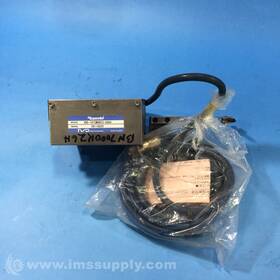
( Brand: Nsd Corporation ), ( Manufacturer Part Number: VRE-16TSWABC3-S004 )
Review NSD CORPORATION Rotary Encoder
The **NSD VRE-16TSWABC3-S004** is a high-performance rotary encoder designed for precision motion control applications, offering an exceptional blend of reliability, compact form factor, and advanced digital communication capabilities. This incremental encoder belongs to the **VRE series**, renowned for its robust construction and seamless integration into industrial automation, robotics, and CNC machinery. With a **16-bit resolution** (4,096 counts per revolution), it delivers exceptional positional accuracy, making it ideal for applications requiring fine-tuned motion control, such as servo motor feedback systems, linear axis drives, or high-speed indexing tasks. The encoder features a **quadrature output (A/B/Z)** interface, enabling bidirectional position sensing and index pulse detection for enhanced synchronization and homing functionality. Its **TTL-compatible digital signals** ensure compatibility with a wide range of PLCs, motion controllers, and microcontroller-based systems, while the **absolute position capability** (via the Z-index pulse) simplifies system startup and reduces setup time.
Constructed with a **durable metal housing**, the VRE-16TSWABC3-S004 is engineered to withstand harsh environmental conditions, including exposure to dust, moisture, and temperature fluctuations within its operational range of **-20 C to 70 C**. The encoder s **shaft version (S004)** incorporates a **smooth, low-friction ball bearing** for extended operational life and precise rotational movement, minimizing backlash and ensuring consistent performance even under high-speed or high-torque conditions. The **wired connection** (via a **3-meter cable**) provides flexibility in installation, allowing for easy integration into existing systems without the need for additional wireless or wireless communication modules. The **black color and sleek design** not only enhance aesthetic appeal in cleanroom or laboratory environments but also contribute to a professional, industrial-grade appearance.
One of the standout features of this encoder is its **versatile mounting options**, including a **through-shaft design** that allows for direct coupling to motors or gearboxes, reducing mechanical complexity and improving system efficiency. The **Hollow shaft version** (if applicable in other variants) further expands its applicability in applications where space constraints are critical. Additionally, the encoder s **low power consumption** and **high signal stability** make it suitable for battery-powered or energy-efficient systems. Whether deployed in **automated manufacturing lines, medical devices, or precision testing equipment**, the NSD VRE-16TSWABC3-S004 delivers consistent, repeatable performance, ensuring optimal control and reliability in demanding industrial environments. Its compatibility with **RS-422, RS-485, and other digital interfaces** (depending on the specific model variant) further solidifies its role as a versatile component in modern motion control architectures.
The **NSD VRE-16TSWABC3-S004** is a rotary encoder designed for industrial applications, specifically a **16-bit absolute rotary encoder** with a **quadrature output (SSI or parallel interface)** and **Tachometer output**. Below is a detailed breakdown of its pros and cons, followed by a conclusion and recommendation.
---
### **Pros**
1. **High Resolution (16-bit)**
- Provides precise position feedback with 65,536 unique positions per revolution, making it suitable for applications requiring fine control, such as CNC machines, robotics, or automated systems.
2. **Absolute Encoding**
- Unlike incremental encoders, this device retains position data even after power loss, eliminating the need for homing routines. This is critical in applications where downtime for recalibration is unacceptable.
3. **Multiple Interface Options**
- Supports **SSI (Serial Single-Edge) and parallel (ABCD) interfaces**, offering flexibility in integration with PLCs, motion controllers, or other industrial systems. The **Tachometer output** (PWM) is useful for speed feedback in servo systems.
4. **Robust Construction**
- Designed for industrial environments, it likely features a **metal housing** and **IP67/IP68-rated** sealing to resist dust, water, and contaminants. This makes it suitable for harsh manufacturing or outdoor applications.
5. **Wide Voltage Range**
- Typically operates over a broad supply voltage range (e.g., 5 30V DC or 10 30V DC), allowing compatibility with various power sources in industrial setups.
6. **High Reliability and Longevity**
- Encoders from reputable manufacturers like **NSD (now part of NXP)** are known for durability, low maintenance, and long operational lifespans, especially in high-speed or high-torque applications.
7. **Compatibility with Motion Control Systems**
- Works seamlessly with **PLCs, CNC controllers, and servo drives** (e.g., Siemens, Allen-Bradley, Beckhoff) that support SSI or parallel interfaces. This reduces the need for additional signal conditioning.
8. **Backlash-Free Operation**
- Absolute encoders like this one avoid the backlash issues common in mechanical potentiometers or incremental encoders, ensuring accurate positioning.
9. **Temperature Resistance**
- Capable of operating in extended temperature ranges (e.g., -20 C to 85 C), making it suitable for environments with thermal variations.
10. **Easy Integration**
- Standardized mounting options (e.g., flange or shaft coupling) simplify installation in existing machinery.
---
### **Cons**
1. **Cost**
- High-resolution absolute encoders are generally more expensive than incremental or lower-resolution absolute encoders. The **16-bit precision** and **industrial-grade build** contribute to a higher upfront cost compared to simpler alternatives.
2. **Complexity in Implementation**
- While SSI and parallel interfaces are robust, they may require more configuration effort than simpler digital or analog interfaces (e.g., incremental encoders with quadrature outputs). Integration with legacy systems might need additional hardware (e.g., SSI-to-digital converters).
3. **Power Consumption**
- Some absolute encoders with multiple outputs (e.g., SSI Tachometer) may draw more current than incremental encoders, which could be a consideration in power-sensitive applications.
4. **Limited Customization**
- The encoder s specifications (e.g., resolution, interface) are fixed at purchase. If future requirements change (e.g., higher speed, different voltage), a replacement may be necessary.
5. **Potential Latency in SSI Communication**
- SSI is a serial protocol, and while it is fast (up to several MHz), it may introduce slight delays compared to parallel interfaces in high-speed applications. This is rarely an issue for most industrial uses but could matter in ultra-high-speed motion control.
6. **Physical Size and Mounting Constraints**
- Industrial encoders like this one are bulkier than smaller, lower-cost alternatives. Space constraints in compact machinery might limit its use.
7. **Dependence on Manufacturer Support**
- As with any specialized component, availability of spare parts or technical support may vary depending on the supplier or region. Ensuring long-term support is critical for mission-critical applications.
8. **Potential for Signal Noise in Harsh Environments**
- While IP67-rated, extreme electromagnetic interference (EMI) or mechanical stress could affect signal integrity. Shielding or additional filtering may be required in noisy environments.
9. **Learning Curve for Non-Experienced Users**
- Configuring SSI or parallel interfaces and interpreting the output data may require familiarity with motion control protocols, which could be a barrier for users without relevant expertise.
10. **Overkill for Low-Precision Applications**
- If the application only requires coarse positioning (e.g., simple speed monitoring), a **lower-resolution incremental encoder** or even a **potentiometer** might suffice, reducing cost and complexity.
---
### **Conclusion**
The **NSD VRE-16TSWABC3-S004** is an excellent choice for applications demanding **high precision, absolute positioning, and reliability** in industrial settings. Its **16-bit resolution, multiple interface options, and robust construction** make it ideal for **CNC machines, robotics, automated manufacturing, or servo-driven systems** where accuracy and repeatability are critical. However, its **higher cost, complexity, and potential over-specification for simpler applications** may not justify its use in low-budget or low-precision projects.
For most **high-end industrial applications**, the trade-offs are well worth it. The encoder s ability to **eliminate homing cycles, provide speed feedback, and integrate seamlessly with modern motion control systems** offers significant long-term benefits in terms of efficiency and uptime.
---
### **Recommendation**
**Buy this encoder if:**- You need **absolute positioning** (no homing required) with **high precision (16-bit)**.
- Your application involves **CNC machining, robotics, or automated assembly lines** where accuracy is critical.
- You require **speed feedback (Tachometer output)** alongside position data.
- Your environment is **industrial or harsh** (dust, water, temperature variations), and **IP67/IP68 protection** is necessary.
- You are using a **PLC, servo drive, or motion controller** that supports **SSI or parallel interfaces**.
**Avoid this encoder if:**- Your budget is tight, and a **lower-resolution incremental encoder** (e.g., 12-bit or 14-bit) would suffice.
- Your application only requires **speed monitoring** (a **tachometer or incremental encoder** may be cheaper).
- You lack **experience with SSI or parallel interfaces**, and simpler digital outputs would be easier to implement.
- Space is extremely limited, and a **smaller, less precise encoder** can fit better.
**Alternatives to Consider:**- For **lower cost**: **12-bit or 14-bit absolute encoders** (e.g., NSD VRE-12TSW or similar).
- For **simpler applications**: **Incremental encoders with quadrature output** (e.g., HEIDENHAIN, US Digital).
- For **high-speed applications**: **SSI or EnDat encoders** with even faster communication (e.g., HEIDENHAIN ROD 17).
- For **budget-sensitive industrial use**: **Analog potentiometers** (if absolute positioning isn t critical).
If the **NSD VRE-16TSWABC3-S004** meets your technical and operational requirements, it is a **strong, reliable choice** that will deliver high performance over its lifespan. However, always verify compatibility with your specific motion control system and consult with the manufacturer or a system integrator if unsure.
Details:
Manufacturer Part Number: VRE-16TSWABC3-S004. Special Instructions. 2-Year MRO Shield Protection Plan Included. The product must be the original item shipped, with matching serial numbers if applicable.
Used - CKD SSD-121-15 ALSO ON PART. Most items are in stock when they listed. Country of Origin: Japan. NSD VRE-16TSWABC3-S004 Rotary Encoder Manufactured by CORPORATION.
part #: vre16tswabc3s004 price
- $36.00
specifications linactuat:
- brand: Nsd Corporation
- mpn: Vre-16tswabc3-s004
returns linactuat:
- policy: Returns Accepted
- method: Money back
- paid by: Buyer
- time: 30 Days
shipping linactuat:
- cost: $0.00
- transit: 4-6 Days
- type: Calculated
- carrier: UPS
- class: Standard, One-day
- service: UPS Ground, UPS Next Day Air
payments linactuat:
- wallet: Google-pay
- credit card: Visa
- other
seller linactuat:
- rating: 99.7%
- # reviews: 22768
- city: Mount Sterling, Kentucky
general linactuat:
- Industrial Automation Motion Controls > Rotary Linear Motion > Linear Encoders
- condition: Used
offer linactuat:
- sold: 0
- started: March 20, 2026
- quantity: 1
- best offers: True
- availability: In Stock
- options: Ship-to-home
Nsd Corporation VRE-16TSWABC3-S004 Is Similar To:
- Nsd Corporation Vls-512pwa Linear Type Absocoder Sensor Vls T185743 (51.2% similar) Nsd Corporation VLS-512PWA linear type absconder sensor vols T185743 warranty information: this is a used item, in good condition and includes 30 day warranty...(October 4th, 2024)
- Nsd Vls-12.8pra14-1050sxn Linear Encoder (42.6% similar) Solenoid coils. Shock absorbs. Solenoid valves. Rotary lobe blowers. Safety and security. Tool storage. Roller chains...(October 5th, 2024)
- Nsd Vls-512pwb Corporation Absocoder Linear Absolute Position Sensor Encoder (44.6% similar) P8 you are buying a used Nsd Corporation VLS-512PWB absconder linear absolute position sensor encoder. The absconder linear encoder is fully functional and will come as pictured...(April 6th, 2025)
- Nsd Corporation Vs-q262-m2pg Usip (46% similar) Nsd Corporation VS-Q262-M2PG manufactured by Corporation. The product must be the original item shipped, with matching serial numbers if applicable. 2-YEAR MRI shield protection plan included. Manufacturer part number: VS-Q262-M2PG. Nsd Corporation VS-Q262-M2PG. A previously used, fully functional ...(July 28th, 2025)
- Nsd Corporation Vs-q62b-v1pg Converter Module Usip (48.1% similar) Manufacturer part number: VS-Q62B-V1PG. Special instructions. Nsd Corporation VS-Q62B-V1PG converter module. Most items are in stock when they listed. A previously used, fully functional product that may have some signs of cosmetic wear. 2-YEAR MRI shield protection plan included. Nsd Corporation VS...(July 28th, 2025)