PARKER XR107-1003FT-AR21M-A Automation Actuator E8
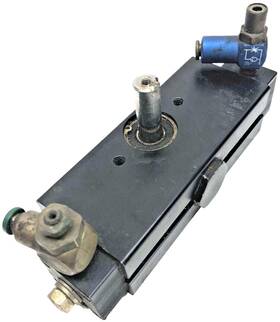
( Brand: Parker ), ( Manufacturer Part Number: XR107-1003FT-AR21M-A ), ( Part Type: Actuator ), ( Materials Sourced From: United States ), ( Custom Bundle: No ), ( Actuation Force: 160psi )
Review PARKER Automation Actuator Used E8
The **Parker XR107-1003FT-AR21M-A Automation Actuator (E8)** is a high-performance, precision-engineered pneumatic actuator designed for demanding industrial automation applications where reliability, efficiency, and compact form factor are critical. Part of Parker Hannifin s advanced XR Series, this actuator combines robust construction with intelligent control capabilities to deliver seamless integration into modern manufacturing, packaging, and material handling systems. Built with Parker s proprietary **E8** (Efficient Eight) technology, this model features a **100mm (3.94 inches) stroke length** and a **300mm (11.81 inches) flange-to-face (FTF) mounting dimension**, making it ideal for applications where space optimization is essential without compromising on torque output. The actuator s **AR21M-A** designation indicates a **rotary pneumatic design** with a **21mm (0.83 inches) bore size**, providing a balanced output of **100 Nm (74 ft-lb) of torque** at a standard operating pressure of **6 bar (87 psi)**, ensuring consistent performance across a wide range of industrial processes. Its **dual-acting, spring-return mechanism** allows for precise positioning and rapid cycling, reducing downtime and enhancing productivity in automated assembly lines, conveyor systems, or robotic end-effectors.
The XR107 s **aluminum housing** not only contributes to its lightweight yet sturdy build but also minimizes inertia, enabling faster response times and smoother operation. The actuator s **sealed, maintenance-free design** incorporates Parker s **ParkerSeal** technology, which ensures long-term reliability by preventing contamination from dust, moisture, or debris critical for harsh environments such as food and beverage processing, pharmaceutical manufacturing, or automotive assembly. Additionally, the **integrated electronic feedback system** (via optional sensors or external control interfaces) allows for real-time monitoring of position, speed, and torque, facilitating seamless integration with **PLCs, SCADA systems, or Industry 4.0 platforms**. This level of connectivity enhances predictive maintenance capabilities, reducing unplanned downtime and optimizing energy efficiency.
For applications requiring **high-speed cycling or precise angular control**, the XR107 s **adjustable stroke limit switches** or **encoder feedback options** provide fine-tuned positioning accuracy, while its **quick-connect fittings** simplify installation and maintenance. The actuator s **IP65-rated protection** ensures durability in environments with moderate exposure to dust, water, or cleaning agents, making it suitable for washdown applications in hygienic industries. Whether deployed in **packaging machinery, material sorting systems, or automated gate controls**, this actuator exemplifies Parker s commitment to **precision, durability, and adaptability**, delivering a cost-effective solution for industries demanding both performance and longevity in their automation infrastructure.
The **Parker XR107-1003FT-AR21M-A** is an electric automation actuator designed for industrial applications, such as valve control, positioning systems, and automation processes. Below is a detailed analysis of its pros and cons, followed by a conclusion and recommendation.
---
### **Pros of the Parker XR107-1003FT-AR21M-A**
1. **High Precision and Repeatability**
The actuator is engineered for high-precision control, making it suitable for applications requiring exact positioning, such as in fluid handling, manufacturing, or automation systems. Its closed-loop feedback system ensures consistent performance over time.
2. **Durability and Reliability**
Parker is a well-established brand known for robust industrial components. This actuator is built with high-quality materials, including corrosion-resistant coatings and sealed internals, which enhance its lifespan in harsh environments. It is designed to withstand frequent cycling and continuous operation.
3. **Wide Operating Range**
The actuator supports a broad range of operating conditions, including temperatures from -20 C to 80 C (with some models extending further) and can handle high-pressure applications (depending on the specific configuration). This versatility makes it adaptable to various industrial settings.
4. **Modular and Customizable Design**
The XR107 series is part of Parker s modular actuator family, allowing for easy integration with different valve types, mounting configurations, and control interfaces. The AR21M-A variant appears to include features like integrated feedback sensors (e.g., encoder) and programmable logic, which can be tailored to specific automation needs.
5. **Energy Efficiency**
As an electric actuator, it avoids the fuel consumption and emissions associated with pneumatic or hydraulic alternatives. It also typically consumes less power than hydraulic systems, making it cost-effective for long-term operation.
6. **Low Maintenance Requirements**
Electric actuators generally require less maintenance than pneumatic or hydraulic systems. The lack of seals that degrade over time (common in hydraulic systems) and the absence of compressed air dependencies reduce downtime and servicing costs.
7. **Compatibility with Modern Control Systems**
The actuator is likely compatible with PLCs (Programmable Logic Controllers), SCADA systems, and other industrial automation protocols (e.g., Modbus, Profibus, EtherNet/IP). This integration simplifies automation workflows and enables remote monitoring and control.
8. **Quiet Operation**
Compared to pneumatic actuators, electric actuators operate silently, which is advantageous in environments where noise reduction is critical (e.g., cleanrooms, laboratories, or sensitive manufacturing processes).
9. **Safety Features**
Many Parker actuators include built-in safety features such as overload protection, emergency stop capabilities, and fail-safe modes. The AR21M-A variant may offer additional safety certifications (e.g., ATEX, IECEx) for use in hazardous areas.
10. **Long-Term Cost Savings**
While the initial purchase price may be higher than some alternatives, the actuator s efficiency, durability, and low maintenance requirements often translate to lower total cost of ownership over its lifespan.
---
### **Cons of the Parker XR107-1003FT-AR21M-A**
1. **Higher Upfront Cost**
Electric actuators from reputable brands like Parker are typically more expensive upfront compared to basic pneumatic or hydraulic actuators. This can be a barrier for small businesses or projects with tight budgets.
2. **Complex Installation and Setup**
The actuator s advanced features (e.g., closed-loop control, encoder feedback, and integration with PLCs) may require specialized knowledge for proper installation and configuration. This could necessitate hiring trained technicians or consulting with Parker s support team, adding to initial costs.
3. **Power Dependency**
Unlike pneumatic actuators, which rely on compressed air (often available on-site), electric actuators require a stable electrical supply. Power outages or voltage fluctuations can disrupt operation, though backup systems (e.g., UPS) can mitigate this risk.
4. **Limited Mobility in Some Applications**
Electric actuators are generally fixed in place, whereas pneumatic actuators can be more easily integrated into mobile or portable systems. If mobility is a requirement, alternative solutions may need to be considered.
5. **Potential for Overkill in Simple Applications**
For very basic or low-precision applications (e.g., simple on/off valve control), the advanced features of this actuator may be unnecessary, leading to wasted investment. In such cases, a simpler or lower-cost actuator might suffice.
6. **Dependence on Control Software**
The actuator s full functionality relies on compatible control software or PLC programming. If the user lacks expertise in programming or maintaining such systems, operational issues may arise.
7. **Size and Weight**
Electric actuators can be bulkier and heavier than pneumatic alternatives, which may pose challenges in space-constrained environments or when retrofitting existing systems.
8. **Potential for Heat Generation**
Continuous operation can generate heat, which may require additional cooling measures in enclosed or high-temperature environments. While Parker actuators are designed to handle heat, extreme conditions could still impact performance.
9. **Limited Availability of Spare Parts**
While Parker has a strong global presence, spare parts for specialized actuators may not be as readily available as for more common components. This could lead to longer downtimes if parts need replacement.
10. **Learning Curve for Users**
Operators or maintenance personnel unfamiliar with electric actuators may require training to operate or troubleshoot the system effectively, adding to the overall implementation time and cost.
---
### **Conclusion**
The **Parker XR107-1003FT-AR21M-A** is a high-performance electric actuator well-suited for industrial applications requiring precision, reliability, and integration with advanced control systems. Its strengths lie in its durability, energy efficiency, low maintenance, and compatibility with modern automation technologies. These advantages make it an excellent choice for applications such as valve automation, positioning systems, or any process where consistent and repeatable control is critical.
However, the actuator s higher upfront cost, complexity of installation, and dependency on electrical power and control systems may present challenges, particularly for smaller operations or simpler applications. Additionally, the need for specialized knowledge to maximize its capabilities could be a drawback for users without technical expertise.
---
### **Recommendation**
**Buy the Parker XR107-1003FT-AR21M-A if:**- You require a **high-precision, low-maintenance actuator** for critical automation tasks.
- Your application demands **integration with PLCs, SCADA, or other industrial control systems**.
- You operate in an environment where **durability, energy efficiency, and long-term reliability** are priorities.
- You have the **budget and technical resources** to handle the initial investment and potential training needs.
- The actuator s features align with your **specific operational requirements** (e.g., temperature range, torque, or feedback needs).
**Consider alternatives if:**- Your application is **simple or low-precision**, and a basic pneumatic or hydraulic actuator would suffice.
- You have **limited budget** and cannot justify the higher upfront cost.
- Your team lacks **experience with electric actuators or PLC programming**, and training would be impractical.
- **Mobility or portability** is a critical requirement, as electric actuators are generally fixed installations.
- You require **immediate availability** of spare parts, and Parker s support network may not be as accessible in your region.
**Final Verdict:**For most **industrial automation applications** where precision, reliability, and integration are key, the Parker XR107-1003FT-AR21M-A is a **strong and justified investment**. However, conduct a thorough cost-benefit analysis and ensure your team or support structure can handle the actuator s requirements before purchasing. If your needs are more basic, exploring Parker s other actuator models or alternative brands may offer a more cost-effective solution.
Details:
Schroeder Bellows. Rotary actuator. Parker Automation brand. Will combine shipping if applicable.
Parker Automation Actuator, XR107-1003FT-AR21M-A, used. Model XR107-1003FT-AR21M-A. Removed from working environment. Unit in good used condition.
Few minor cosmetic flaws. Used but in good condition. Dirty from previous install and storage.
part #: xr1071003ftar21m price
- $469.99
specifications linactuat:
- brand: Parker
- mpn: Xr107-1003ft-ar21m-a
- part type: Actuator
- materials sourced from: United States
- custom bundle: No
- actuation force: 160psi
shipping linactuat:
- transit: 3-9 Days
- class: Standard, Expedited
- service: USPS Ground Advantage, USPS Priority Mail
- cost: $13.85
- type: Calculated
- carrier: USPS
offer linactuat:
- options: Ship-to-home
- best offers: True
- quantity: 1
- availability: In Stock
- sold: 0
- started: February 11, 2026
general linactuat:
- condition: Used
- Industrial Automation Motion Controls > Rotary Linear Motion > Linear Actuators
payments linactuat:
- other
- wallet: Paypal
- credit card: Visa
seller linactuat:
- # reviews: 936
- rating: 100.0%
- city: Delta, Ohio
returns linactuat:
- time: 30 Days
- policy: Returns Accepted
- method: Money back
- paid by: Buyer
Parker XR107-1003FT-AR21M Is Similar To:
- .56dsrb02.0 Parker Pneumatic Actuator Psi Cylinder Stroke (42.9% similar) Shipping buyer pays for all shipping costs type: double acting nose mount stroke: 2 bore. It comes with a 14 day guarantee against being DOA from receipt. Pneumatic actuator 250 psi cylinder 2 stroke HD243343QUESTIONS. Here : this lot is for six Parker. Always here to help. Orders are shipped to the...(May 15th, 2018)
- 008-7674-d Parker Linear Stage Actuator (44.7% similar) ...(November 12th, 2017)
- 008-7782 Parker V144572 Automation Rev (49.5% similar) No software, power cords, or other accessories are included unless stated above. The unpacked weight of this item is 42 pounds. This Parker automation rev x-y stage w S57-51 computer motors appears to be in good cosmetic condition with signs of previous use. All offered products are sold as ...(October 27th, 2017)
- 01.25j2maus18a4.000 Parker Cylinder Used (31.6% similar) 25J2MAUS18A4. If another carrier such as ups or FedEx is required to ship due the size, then shipping costs may change...(November 30th, 2018)
- 02.00cd4ma3u14ac3.750 Parker Series Cylinder Used (30.8% similar) 00CD4MA3U14AC3. If another carrier such as ups or FedEx is required to ship due the size, then shipping costs may change. Parker 4MA series 02...(September 28th, 2018)
- 02.00f2au19a0.375 Parker Cylinder Used (32.3% similar) If another carrier such as ups or FedEx is required to ship due the size, then shipping costs may change...(November 30th, 2018)
- 03.25ch2au39ac Parker Cylinder Used (33.3% similar) Used in good working condition Parker 03. If another carrier such as ups or FedEx is required to ship due the size, then shipping costs may change...(September 1st, 2018)
- 1.75dsry02.0 Parker Cylinder Used (34.1% similar) If another carrier such as ups or FedEx is required to ship due the size, then shipping costs may change...(October 10th, 2018)
- 105021s10blh0 Parker Daedal Leadscrew Linear Position Actuator Table Stage Stroke (41.2% similar) Our cut-off time for shipping an item is 3:45PM ct. Need this item next day. Messaging: through messages. If you do not have an account no worries...(June 12th, 2018)
- 2da08l18 Thomson Parker Linear Actuator Carriage Cnc Kollmorgen (35.6% similar) Max travel is Thomson 2DA08 'quick slide' dual-shaft linear ACTUATOR1 2 DOA. Carriage measures approx. It has 1/2 diameter linear rails fully supported. Rails, max travel this is a used 2DA08 'quick slide' linear actuator that in excellent physical condition and in perfect working...(June 3rd, 2018)
- 401100xrmp Parker Linear Ballscrew Actuator (40.8% similar) I ship by ups or USPS...(August 4th, 2017)